UCEED 2027: Exam Dates, Registration, Eligibility, Pattern, Syllabus & Exam Centres — Complete Guide
Everything B.Des aspirants need to know about UCEED 2027, conducted by IIT Bombay on January 17, 2027.
If you're targeting a B.Des seat at IIT Bombay, IIT Delhi, IIT Guwahati, IIT Hyderabad, IIT Indore, IIT Roorkee, or IIITDM Jabalpur, UCEED is your entry point. IIT Bombay has already locked in the exam date well ahead of the usual schedule — here's everything confirmed so far, plus what's still pending.
UCEED Exam 2027 Details
| Particular | Details |
|---|---|
| Full Form | Undergraduate Common Entrance Exam for Design |
| Conducted By | IIT Bombay |
| Purpose | Admission to B.Des programmes at IITs and IIITDM Jabalpur |
| Exam Date | January 17, 2027 (confirmed) |
| Session Timing | 9:00 AM – 12:00 Noon |
| Notification & Registration | Expected October 1, 2026 |
| Participating Institutes | IIT Bombay, IIT Delhi, IIT Guwahati, IIT Hyderabad, IIT Indore, IIT Roorkee, IIITDM Jabalpur |
| Exam Mode | Part A: Computer-based; Part B: Pen-and-paper |
Also Read: How to crack the UCEED Exam in 1 month?
UCEED 2027: Important Dates
| Event | Date (Tentative unless noted) |
|---|---|
| Exam date | January 17, 2027 (Official — announced May 25, 2026) |
| Notification & registration portal opens | October 1, 2026 |
| Last date to apply (without late fee) | November 5,2026 |
| Last date to apply (with late fee) | November 10, 2026 |
| Application correction window | November 2026 |
| Admit card release | First week of January 2027 |
| Draft answer key | Third week of January 2027 |
| Final answer key | February 2027 |
| Result declaration | March 2027 |
| Counselling / seat allotment begins | March–April 2027 |
The exam date itself is locked and official. Everything around registration is still tentative until the full information brochure drops on October 1.
UCEED 2027 Exam Centres (27 Cities)
Candidates must select three exam cities in order of preference during registration. Once submitted, city changes aren't entertained, so choose realistically.
| Sr. No | City | Sr. No | City |
|---|---|---|---|
| 1 | Ahmedabad | 15 | Kolkata |
| 2 | Bengaluru | 16 | Kozhikode |
| 3 | Bhopal | 17 | Lucknow |
| 4 | Bhubaneswar | 18 | Mumbai |
| 5 | Chandigarh/Mohali | 19 | Nagpur |
| 6 | Chennai | 20 | Noida |
| 7 | Coimbatore | 21 | Panaji |
| 8 | Dehradun | 22 | Patna |
| 9 | Delhi | 23 | Pune |
| 10 | Ernakulam | 24 | Raipur |
| 11 | Guwahati | 25 | Thiruvananthapuram |
| 12 | Hubballi (Hubli) | 26 | Thrissur |
| 13 | Hyderabad | 27 | Visakhapatnam |
| 14 | Jaipur |
If a city doesn't attract enough registrations, IIT Bombay may drop it and reassign candidates to their second or third preference — so it's worth listing a realistic backup, not just your dream city.
Eligibility Criteria for UCEED 2027
| Criterion | Details |
|---|---|
| Qualifying exam | Passed Class 12 (10+2) for the first time in 2026, or appearing in 2027, from any stream — Science, Commerce, or Arts/Humanities |
| Minimum marks | No minimum percentage required in Class 12 |
| Age Limit (General/EWS/OBC-NCL) | Born on or after October 1, 2002 |
| Age Limit (SC/ST/PwD) | Born on or after October 1, 1997 (5-year relaxation) |
| Number of attempts | Maximum 2 attempts, in 2 consecutive years |
UCEED 2027 Application Fee (Expected)
| Category | Fee |
|---|---|
| General / OBC-NCL / EWS (Male) | ₹4,000 |
| SC / ST / PwD (Male) | ₹2,000 |
| Female (all categories) | ₹2,000 |
| Late fee (all categories) | ₹500 additional |
Fees are non-refundable and must be paid online during registration.
How to Apply: UCEED 2027 Registration Steps
- Visit uceed.iitb.ac.in once the notification is released and register with a valid email ID and mobile number.
- Fill in personal, academic, and category details.
- Select three exam cities in order of preference from the 27-city list.
- Upload documents — photograph, signature, Class 12 marksheet, and category/PwD certificates as applicable.
- Pay the application fee online.
- Download the confirmation page and watch for the correction window to fix any errors.
See What Our Students Have To Say About Their Success with MAD School

UCEED 2027 Exam Pattern
UCEED is a 300-mark exam split across two parts.
Part A (Computer-Based Test)
| Question Type | No. of Questions | Marks per Correct | Marks per Wrong | Total Marks |
|---|---|---|---|---|
| Numerical Answer Type (NAT) | 14 | 4 | 0 | 56 |
| Multiple Select Questions (MSQ) | 15 | Partial marking | −1 | 60 |
| Multiple Choice Questions (MCQ) | 28 | 3 | −0.71 | 84 |
| Total Part A | 57 | 200 |
Part B (Pen-and-Paper)
| Question Type | No. of Questions | Total Marks |
|---|---|---|
| Sketching | 1 | 50 |
| Design Aptitude | 1 | 50 |
| Total Part B | 2 | 100 |
Part B is displayed on the computer screen, but you write/draw your answer in a physical answer book — and it's only evaluated if you clear the Part A cutoff first.
Also Read: Download UCEED Previous year question papers and answers for practise!
UCEED 2027 Syllabus Overview
- Part A: Visualization and spatial ability, observation and design sensitivity, environmental and social awareness, analytical and logical reasoning, language and creativity, numerical ability.
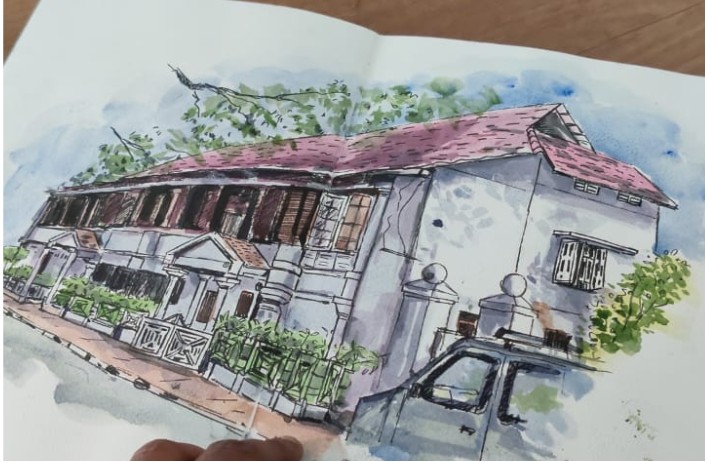
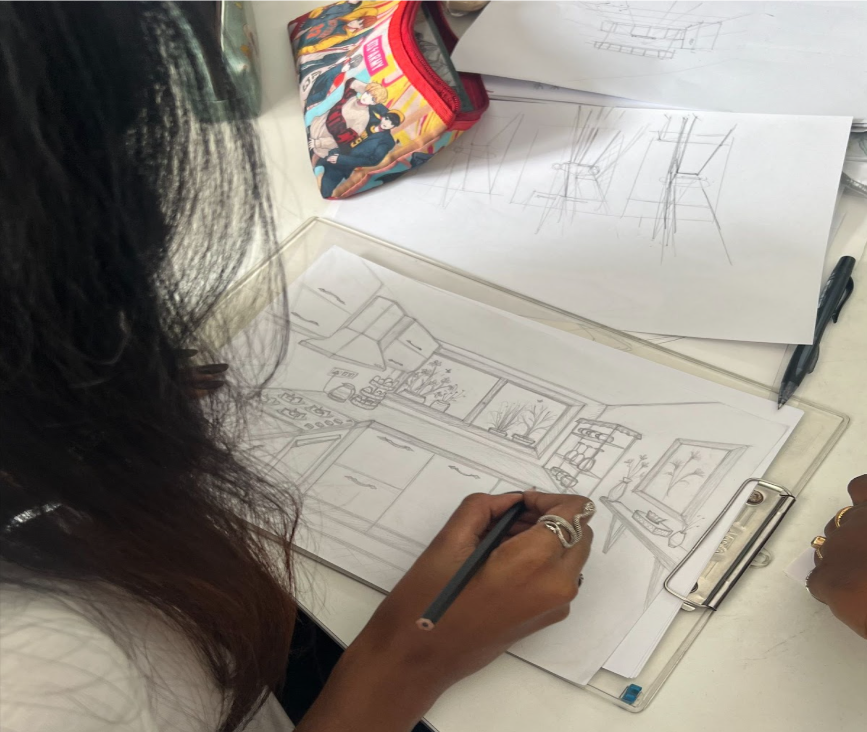
- Part B: Drawing (sketching an object, scene, or situation with proportion, perspective, and detail) and design aptitude (a creative problem-solving question testing your ability to visually communicate a solution).
UCEED 2027 Admit Card
| Detail | Information |
|---|---|
| Release date | 2 January 2027 |
| Correction window | Second week of January 2027 (for discrepancies) |
| Download portal | uceed.iitb.ac.in (candidate login) |
| Details on admit card | Name, photograph, roll number, exam centre, date and reporting time |
How to download: Log in to the UCEED candidate portal with your registered email/mobile and password, open the "Admit Card" link on your dashboard, verify all details — especially your allotted exam centre — and download a clear printout for exam day.
UCEED 2027 Result
| Event | Expected Date |
|---|---|
| Announcement of Part A cutoff marks | February 2027 |
| Result declaration | First week March 2027 |
| Scorecard download window opens | March 2027 |
| Last date to download scorecard | June–July 2027 |
Results are declared online only, through the UCEED candidate portal. Part A marks are shown for all candidates; Part B marks, total score, and your All India Rank (AIR) are shown only if you've cleared the Part A cutoff and been shortlisted. Your scorecard also carries your category-wise qualifying status — download and save it, since a hard copy isn't posted or emailed separately, and it's valid for one year from declaration.
UCEED 2027 Cutoff & Rank Trends
UCEED works on two distinct cutoffs — don't confuse them:
- Part A qualifying cutoff: The minimum score (category-wise) needed to get your Part B evaluated and appear in the merit list at all.
- Admission (counselling) cutoff: The closing rank at each participating institute during seat allotment — set independently by each IIT and revised every counselling round.
What a Good UCEED Score Looks Like (Illustrative, Based on Recent Cycles)
| Total Score (out of 300) | Indicative Outcome |
|---|---|
| 200+ | Outstanding — strong chance at IIT Bombay / IIT Delhi |
| 190–200 | Very good — realistic shot at IIT Guwahati / IIT Hyderabad |
| 170–190 | Decent — IIT Roorkee / IIITDM Jabalpur range |
| Below 170 | Focus on improving accuracy, GK, and drawing quality |
Illustrative Closing Rank Pattern by Institute (General Category, Recent Cycle)
| Institute | Approx. Closing Rank Range (Round 1) |
|---|---|
| IIT Bombay | Single digits to mid-teens |
| IIT Delhi | ~15–30 |
| IIT Guwahati | ~15–80 |
| IIT Hyderabad | ~19–40 |
| IIT Indore | ~45–70 |
| IIT Roorkee | ~55–90 |
These ranges shift every round and every year based on the number of candidates, seat matrix changes, and category-wise reservation — treat them only as a rough sense of relative competitiveness across institutes, not a 2027 forecast. Always check the official, round-wise cutoff released by IIT Bombay's Joint Seat Allocation process for exact figures.
How to Prepare for UCEED 2027
- Master Part A speed first. With negative marking on MCQs and MSQs, accuracy under time pressure matters more than attempting every question.
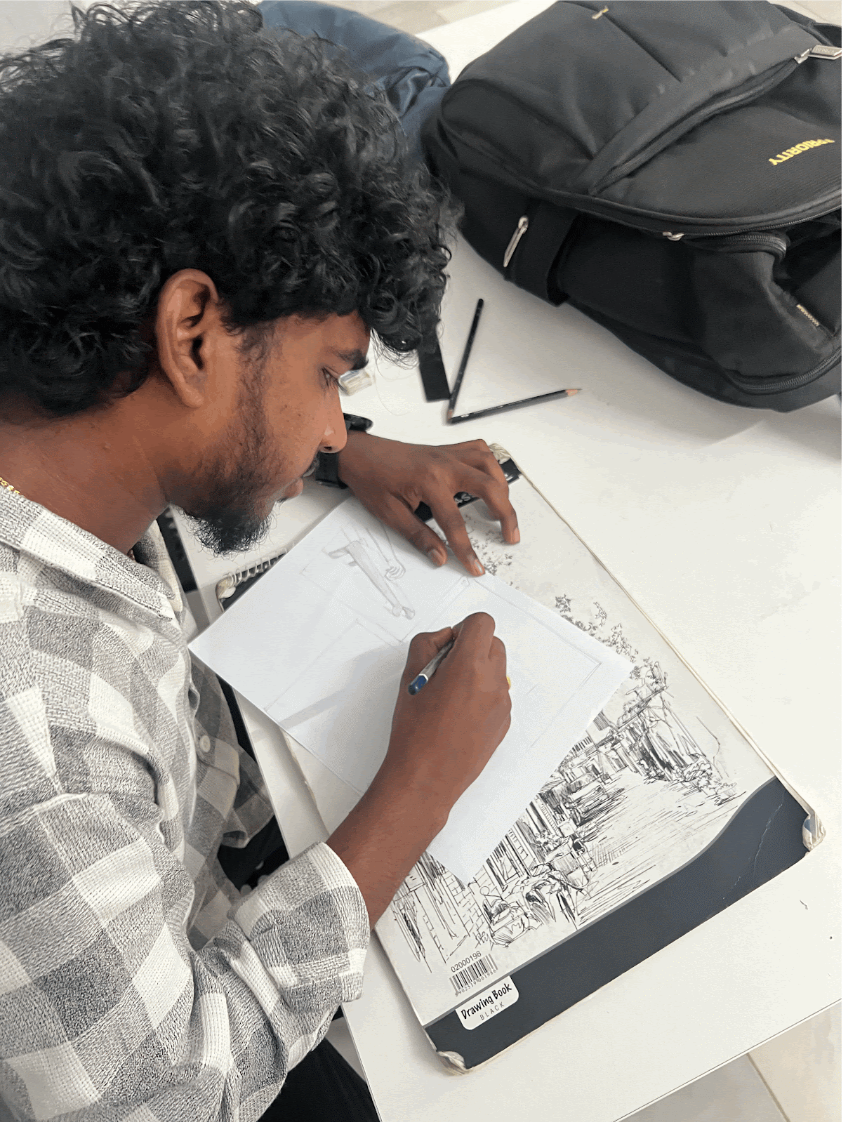
- Build a sketching routine you can sustain for the full Part B window. UCEED rewards clarity of thought and composition as much as raw drawing talent — practice full-length mock Part B sessions, not just quick sketches.
- Study visual and spatial reasoning specifically. NAT and MSQ questions often test 3D visualization, pattern completion, and mental rotation — these are trainable skills with consistent practice.
- Practice previous years' papers under exam conditions — UCEED has a distinctive style that's hard to simulate without working through real past papers.
- Read on design, culture, and current affairs. Part A's observation and awareness questions reward candidates who stay generally well-read.
Why a Structured Coaching Programme Helps
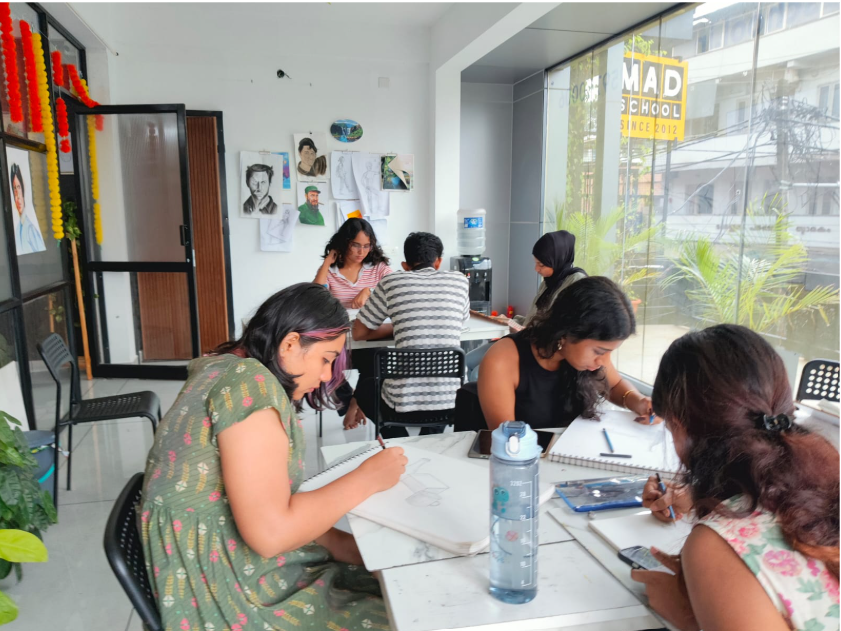
Cracking Part B — the sketching and design-aptitude component that carries a third of the total marks but is often the deciding factor in close calls — is hard to self-assess. Mad School's UCEED coaching in hyderabad, chennai and kerala runs a dedicated UCEED batch, with mentor-reviewed sketching practice and timed mock tests replicating the real Part A/B split. Structured feedback on your sketches is often the single biggest lever for improvement — something that's genuinely hard to get from self-study alone.
FAQ's
Yes — January 17, 2027, officially announced by IIT Bombay in May 2026.
The full notification and application process are expected to open October 1, 2026, at uceed.iitb.ac.in.
Yes — UCEED is open to candidates from Science, Commerce, and Arts/Humanities streams.
A maximum of two attempts, in two consecutive years.
No — there's no minimum percentage required to appear for the exam itself, though admission cutoffs at individual institutes may factor in academic performance separately.
UCEED is for undergraduate B.Des admission after Class 12; CEED is for postgraduate M.Des/PhD admission after a bachelor's degree. Both are conducted by IIT Bombay, on the same day.
Explore More Design & Architecture Entrance Exam Guides
- NID DAT 2027: Exam Dates, Registration, Eligibility & Exam Centres — for B.Des and M.Des at the National Institute of Design.
- CEED 2027: Exam Dates, Registration, Eligibility & Exam Centres — for M.Des/PhD design programmes, conducted on the same day as UCEED.
- NIFT 2027: Exam Dates, Registration, Eligibility & Exam Centres — for B.Des, B.FTech, M.Des, MFM, and M.FTech at NIFT.
- NATA 2027: Exam Dates, Registration, Eligibility & Exam Centres — for B.Arch admissions through the Council of Architecture.
UCEED's exam date (January 17, 2027) lands almost a month after NID DAT Prelims (December 20, 2026) — a useful sequence if you're attempting both, since NID Prelims can double as early exam-day practice.