Future of the Design Industry: Why This Could Be the Best Career Choice for Today's Students
For many Indian parents, choosing a career for their child is one of the biggest decisions they will ever make. Engineering, medicine, law, and government jobs have traditionally been considered safe and respectable options. But the world is changing rapidly.
Today, companies don't just compete based on products or prices. They compete based on experiences, creativity, branding, innovation, and user satisfaction. This shift has made design one of the fastest-growing industries across the globe.
If you're a student wondering whether design is worth pursuing, or a parent trying to understand whether a design career offers long-term stability, this article is for you.
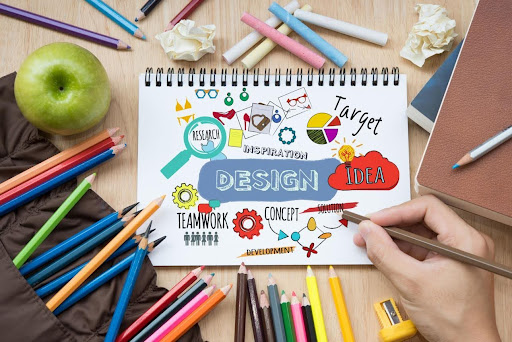
Design Is Everywhere Around You
Take a moment and look around.
The phone in your hand, the chair you're sitting on, your favourite shopping app, the packaging of your toothpaste, the logo of your favourite brand, the clothes you wear, the café you love visiting, even the user interface of your banking app—every single one of these exists because designers helped create them.
Design is no longer limited to painting or drawing. It influences how people interact with products, technology, businesses, and services every day.
As industries evolve, the need for skilled designers continues to grow.
Why Is the Demand for Designers Increasing?
Businesses have realised that people buy experiences, not just products.
Think about why someone chooses Apple over another smartphone brand. Or why certain restaurants become Instagram favourites. Or why some websites are easy to use while others frustrate users.
Behind these successful businesses are teams of designers working on branding, product development, user experience, packaging, interiors, communication, and digital interfaces.
Companies today are actively investing in design because good design directly impacts customer satisfaction and business growth.
Artificial Intelligence Is Changing Jobs—but It Is Also Creating Opportunities for Designers
Many parents worry that Artificial Intelligence (AI) will replace creative careers.
The reality is more balanced.
AI can generate images or assist with repetitive tasks, but it cannot fully replace human creativity, strategic thinking, empathy, cultural understanding, storytelling, or original problem-solving.
A skilled designer doesn't just create visuals. They understand user behaviour, identify problems, develop concepts, collaborate with teams, and create meaningful experiences.
In fact, AI has become another tool that designers use to work faster and explore ideas more efficiently.
Students who learn design alongside AI tools are likely to have even stronger career prospects.
Design Careers Extend Far Beyond Fashion
When people hear "design," many immediately think of fashion.
However, the design industry includes numerous specialised fields.
Product Design
Product designers create everything from furniture and electronics to medical devices and consumer products.
User Experience (UX) Design
UX designers focus on making websites and apps easy and enjoyable to use.
User Interface (UI) Design
UI designers work on visual layouts, buttons, colours, and digital interfaces that users interact with daily.
Graphic Design
Graphic designers create visual communication for brands, advertisements, social media, and print media.
Animation and Motion Graphics
With the growth of OTT platforms, gaming, advertising, and digital marketing, animation professionals are in high demand.
Interior Design
Interior designers create functional and aesthetically pleasing residential and commercial spaces.
Communication Design
Communication designers combine branding, storytelling, and visual communication to help businesses connect with audiences.
Industrial Design
Industrial designers work on physical products that combine functionality with aesthetics.
Fashion Design
Fashion designers continue to innovate in apparel, textiles, sustainability, and luxury markets.
Each of these fields offers different career paths depending on a student's interests and strengths.
India's Design Industry Is Growing Rapidly
India is witnessing an explosion of startups, e-commerce companies, technology firms, D2C brands, gaming companies, and digital businesses.
Every one of these sectors requires designers.
Whether it's building an app, creating a new product, designing packaging, planning retail spaces, or improving customer experiences, designers are involved at every stage.
Government initiatives supporting innovation and entrepreneurship have also increased opportunities for creative professionals.
The result is a growing demand for trained designers across industries.
Global Opportunities Are Better Than Ever
Design skills are highly transferable across countries.
Many Indian designers work with international clients remotely or relocate to countries like the USA, Canada, Australia, Germany, Singapore, and the UAE.
Freelancing platforms and remote work have made it possible for talented designers to build global careers without leaving India.
Students graduating from reputed design colleges often receive opportunities from multinational companies and international studios.
Related: NATA Preparation Guide: Step-by-step for NATA 2027 aspirants
Can Design Provide Financial Stability?
This is perhaps the most common concern among parents.
The answer depends on skills, portfolio, and continuous learning rather than the degree alone.
A talented designer with strong practical abilities can earn competitive salaries and experience rapid career growth.
Many designers eventually move into leadership roles, start their own agencies, launch product brands, or become entrepreneurs.
Some choose freelancing and work with clients worldwide.
Like software development or marketing, design rewards expertise and innovation.
Creativity Alone Is Not Enough
One common misconception is that students only need to be good at drawing.
In reality, successful designers are also curious thinkers, good observers, effective communicators, and problem solvers.
They ask questions like:
- How can this product be easier to use?
- How can this experience become more enjoyable?
- How can we solve this user's problem?
- How can we make something sustainable?
- How can we improve everyday life?
Drawing is simply one tool among many.
Many students who are average at sketching develop excellent design thinking and become successful professionals.
The Rise of Sustainable Design
Consumers today care about environmental responsibility.
Brands are looking for designers who can create eco-friendly packaging, sustainable products, ethical fashion, circular economy solutions, and energy-efficient spaces.
Sustainability is expected to become one of the biggest drivers of future design careers.
Students entering the field now will likely work on projects that positively impact society and the environment.
Related: How to crack UCEED Exam 2027 in 1 month? Step by Step Guide
Entrepreneurship Opportunities in Design
Unlike many careers, design naturally encourages entrepreneurship.
Many graduates start:
- Branding agencies
- Product design consultancies
- Interior studios
- Fashion labels
- Creative agencies
- UX consulting firms
- Illustration businesses
- Animation studios
Some even build startups around innovative products and services.
For students who dream of becoming business owners, design offers excellent opportunities.
What Skills Will Future Designers Need?
The future designer will combine creativity with technology.
Important skills include:
- Design thinking
- Problem-solving
- Visual communication
- User research
- Digital tools
- AI-assisted workflows
- Collaboration
- Presentation skills
- Critical thinking
- Adaptability
Students who continuously update their skills will remain competitive regardless of industry changes.
Related: How to improve your visualization skills for NID, UCEED and NIFT Design entrance exams?
Why Early Preparation Matters
Admission into top design institutes such as NID, NIFT, UCEED, CEED, and leading private universities is highly competitive.
Preparing early gives students time to develop observation skills, creativity, portfolio quality, sketching abilities, aptitude, and confidence. Many successful aspirants begin preparation during Class 9, 10, 11, or early in Class 12.
Structured coaching can help students understand exam patterns and build the skills expected by design colleges.
A Message to Parents
Parents often worry about choosing unconventional careers.
However, every industry today values innovation. Designers contribute to technology, healthcare, education, transportation, retail, manufacturing, entertainment, architecture, finance, and even government initiatives.
Supporting a child's creative interests does not mean compromising on career stability. In fact, it may prepare them for industries that continue growing over the next several decades.
A Message to Students
If you enjoy observing the world, solving problems creatively, imagining better products, creating meaningful experiences, or simply thinking differently, design could be the perfect career path.
Don't choose design because it looks easy. Choose it because you're excited to create, innovate, and improve people's lives. The future belongs to those who combine creativity with practical thinking—and that's exactly what great designers do.
The future of the design industry is bright, dynamic, and full of possibilities. As technology evolves and businesses become more user-focused, designers will continue playing a critical role in shaping the products, services, and experiences people use every day.
For students and parents exploring career options, design is no longer an alternative path—it is a mainstream profession with global opportunities, entrepreneurial potential, and long-term relevance.
The key is to build strong fundamentals, develop creative confidence, and prepare with the right guidance. With dedication and the right training, today's aspiring designer could become tomorrow's innovator, entrepreneur, or industry leader.
What MAD School Believes
At MAD School, we see design aspirants every day — teenagers who are bursting with creativity but don't know how to channel it. Students who sketch in the margins of their notebooks during math class. Kids who notice the font on a billboard before they notice what the billboard says.
These are not distracted students. These are future designers noticing the world in detail.
Our job — and our joy — is to take that raw, natural ability and give it structure, direction, and ambition. To prepare students not just for entrance exams, but for a lifetime of creative problem-solving.
The future of design is bright. Honestly, it's spectacular.
And your child — the one who keeps doodling, the one who redesigns the family living room in their head, the one who spends hours perfecting a poster — they might just be exactly the kind of thinker the world needs most.
Curious about where design can take your child? Come talk to us at MAD School. We'd love to show you what's possible.
| NID Coaching | UCEED Coaching |
| NATA Coaching | NIFT Coaching |
Frequently Asked Questions (FAQs)
Yes, design has become one of the fastest-growing career fields in India. Industries such as technology, fashion, e-commerce, advertising, gaming, architecture, manufacturing, and digital marketing all require skilled designers.
With increasing demand and diverse career paths, design offers excellent long-term growth opportunities.
Artificial Intelligence can automate certain repetitive tasks and help generate ideas, but it cannot replace human creativity, empathy, strategic thinking, and problem-solving.
Designers who learn to use AI as a tool will likely have an advantage in the future job market.
Not necessarily. While sketching can be helpful, many design fields focus more on creativity, observation, research, and problem-solving than artistic perfection.
Drawing skills can also be improved with practice and proper guidance.
Several design fields have excellent growth potential, including UX/UI Design, Product Design, Communication Design, Animation, Interior Design, Industrial Design, Fashion Design, and Graphic Design.
The best choice depends on your interests and strengths.
Experienced professionals in UX/UI Design, Product Design, Industrial Design, Creative Direction, Brand Strategy, and Design Leadership roles often command high salaries.
Freelancers and entrepreneurs can also build highly profitable careers.
Absolutely. Students from Science, Commerce, and Humanities backgrounds can pursue design courses.
Most design entrance exams focus on aptitude, creativity, logical reasoning, and observation rather than stream-specific knowledge.
No. Design is much broader than fashion or fine arts.
It includes digital products, mobile apps, websites, automobiles, furniture, packaging, branding, animation, interiors, and much more.
Yes. Many students successfully prepare for design entrance exams alongside their board exams.
Good planning and consistent practice can help balance both preparations effectively.
Some of the most popular design entrance exams in India include NID DAT, NIFT Entrance Exam, UCEED, CEED, and entrance exams conducted by several private universities offering design programs.
Future designers should focus on creativity, problem-solving, communication, observation, critical thinking, design thinking, research skills, digital tools, and adaptability to new technologies like AI.
Yes. Design is a global profession.
Skilled designers often work with international companies, freelance clients across different countries, or relocate abroad for career opportunities.
Definitely. Many designers build successful freelance careers by offering services in branding, graphic design, UX/UI, illustration, animation, product design, and digital marketing to clients worldwide.
As businesses increasingly prioritise user experience and innovation, the demand for skilled designers continues to grow.
Professionals who keep learning and upgrading their skills are likely to enjoy strong career stability.
Students can start exploring design as early as Class 9 or 10, but many also begin in Class 11 or 12.
Starting early provides more time to build creativity, improve aptitude, and develop a strong portfolio.
Yes. Many design graduates start their own branding agencies, interior design studios, fashion labels, creative consultancies, product companies, or freelance businesses.
Design education often provides an excellent foundation for entrepreneurship.
The future looks extremely promising.
As technology advances and industries focus more on innovation, sustainability, and user-centric experiences, designers will continue to play an essential role across sectors ranging from healthcare and education to technology and entertainment.
Design is no longer an unconventional career.
It offers diverse job opportunities, competitive salaries, global exposure, entrepreneurial potential, and the chance to work in industries that shape the future.
Supporting a child's creative interests can open doors to rewarding and meaningful career paths.