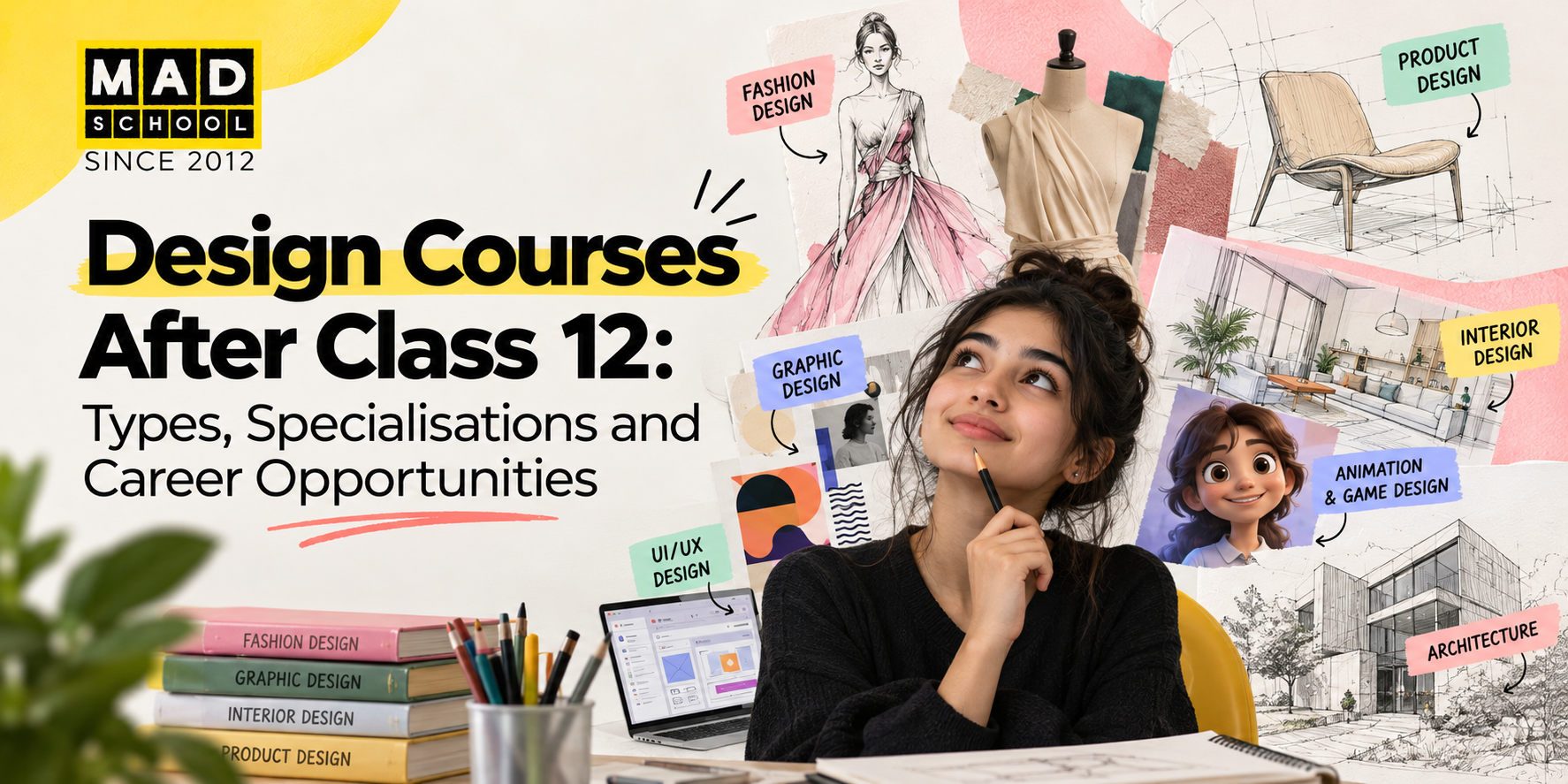
Design Courses After Class 12: Types, Specialisations and Career Opportunities
Choosing a course after Class 12 can feel overwhelming, especially when you are interested in a creative career but are unsure which direction to take. Design is a broad field that offers opportunities in fashion, communication, interiors, products, digital experiences, animation and several other industries.
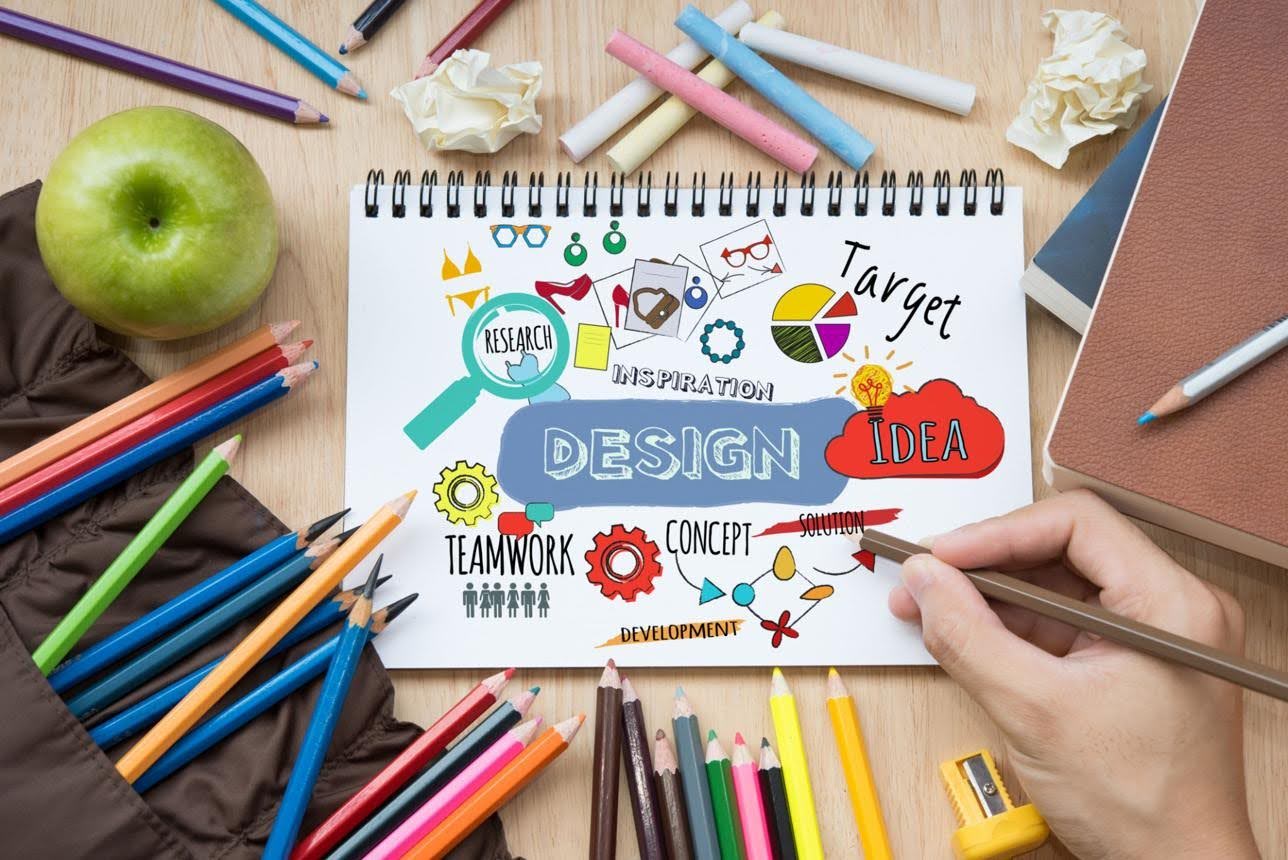
However, design is not limited to drawing or making things look attractive. It involves understanding people, identifying problems, developing ideas and turning those ideas into useful, meaningful and visually effective solutions.
If you enjoy observing the world around you, experimenting with ideas, solving problems or creating things, a design course could be worth exploring.
In this guide, we will look at the different types of design courses after Class 12, the specialisations available, popular entrance exams, career opportunities and the factors you should consider before choosing a course.
What Are Design Courses?
Design courses teach students how to develop ideas and translate them into practical solutions. Depending on the specialisation, students may learn visual communication, product development, space planning, digital interface design, materials, illustration, animation or fashion creation.
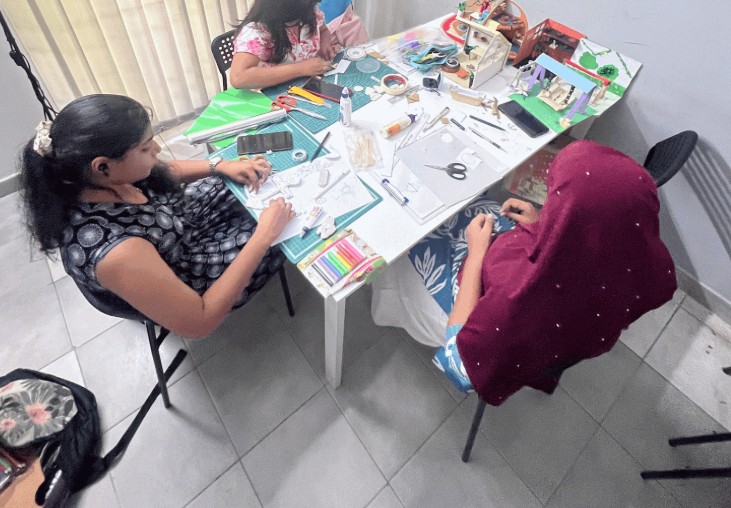
Unlike courses that focus mainly on theoretical learning, many design programmes combine classroom instruction with practical assignments, studio projects, research, experimentation and portfolio development.
Design courses are available at different levels, including:
- Bachelor's degree programmes: Usually three or four years, depending on the course and institution.
- Diploma programmes: Duration and curriculum vary by institution and specialisation.
- Certificate courses: Often focused on a particular skill, software or area of design.
- Postgraduate programmes: Intended for students who have already completed a relevant undergraduate qualification or meet the programme's eligibility requirements.
For students completing Class 12, undergraduate degrees and eligible diploma programmes are common starting points.
Who Can Pursue Design Courses After Class 12?
One of the advantages of design education is that students from different academic backgrounds may be eligible for different programmes.
Depending on the institution and course, students from the following streams may be able to apply:
- Science: Students interested in product design, interaction design, architecture-related fields, animation and technology-driven design.
- Commerce: Students interested in fashion, communication design, branding, retail, product development and business-oriented creative careers.
- Arts and Humanities: Students interested in visual communication, illustration, fashion, interiors, animation and other creative fields.
You do not necessarily need to have studied Fine Arts in school to apply for a design degree. However, eligibility requirements differ between institutions and programmes, so students should always check the official admission criteria.
It is also important to understand that being creative does not automatically mean you are suited to every design specialisation. Different fields require different combinations of observation, research, visual thinking, technical ability, communication and problem-solving.
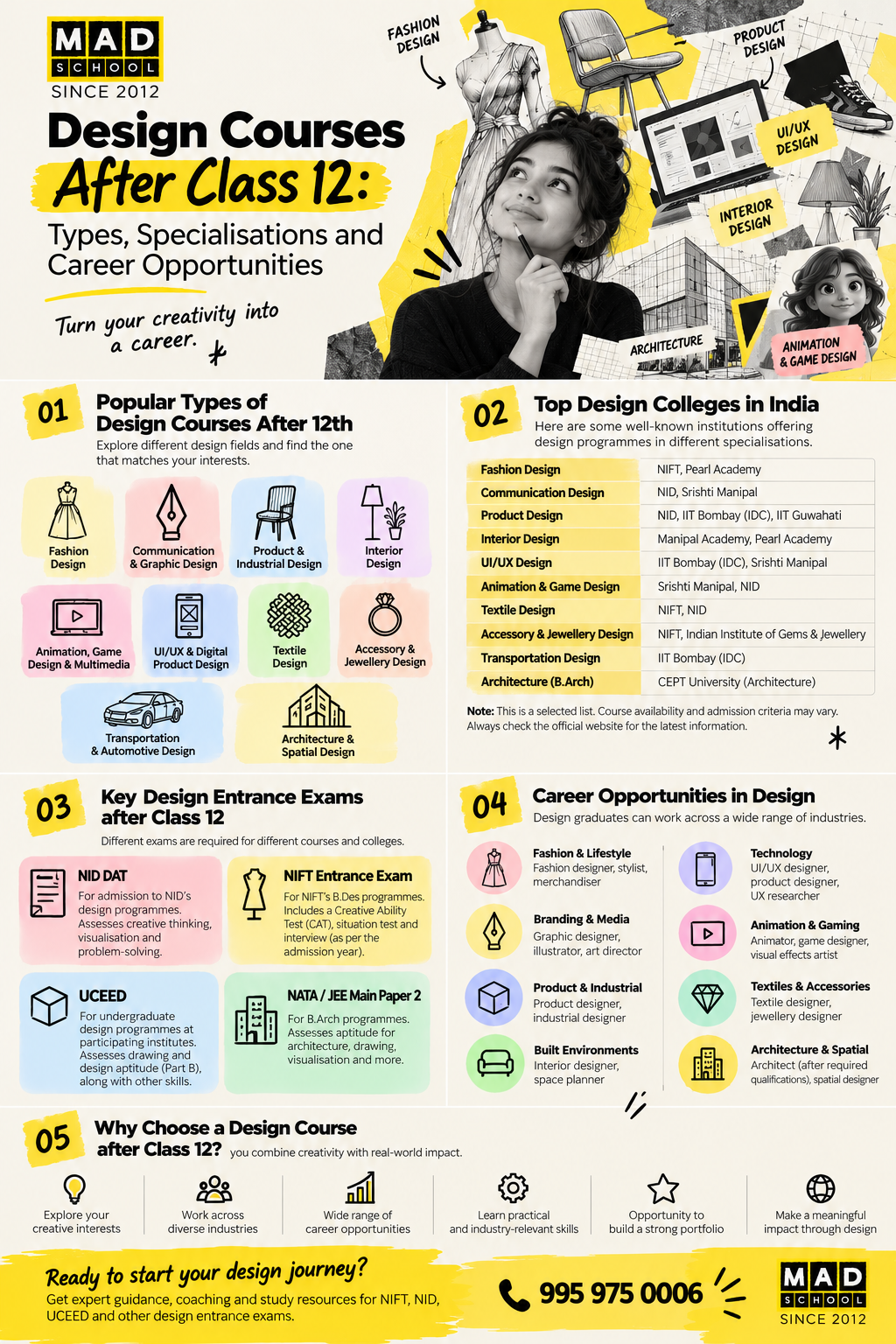
Types of Design Courses After Class 12
Design is made up of several specialisations. Each focuses on a different set of problems, users, materials or experiences.
Here are some of the major design fields students can explore after Class 12.
1. Fashion Design
Fashion design focuses on developing clothing, accessories and wearable products. It combines creativity with an understanding of fabrics, construction techniques, trends, functionality and consumer preferences.
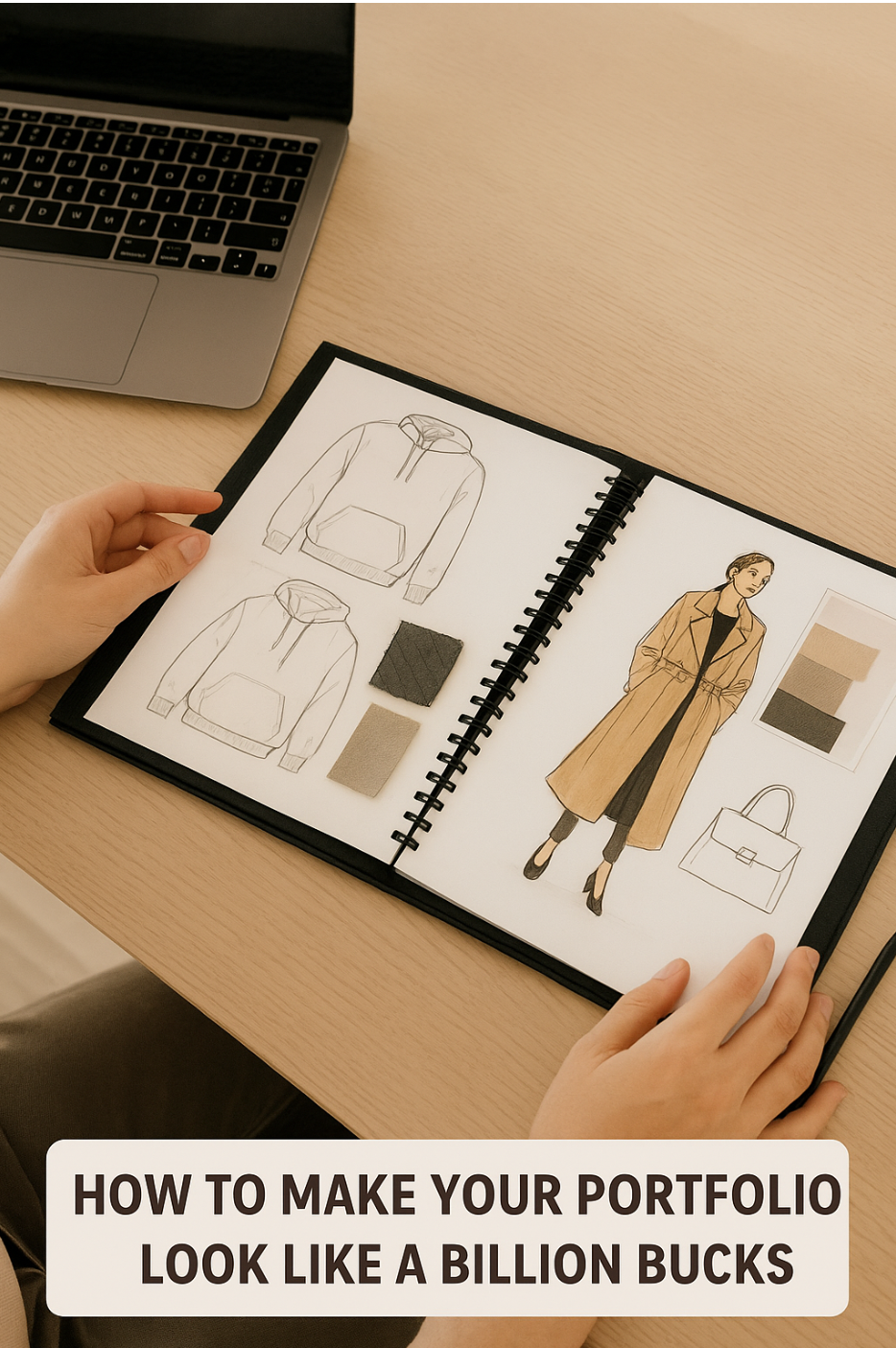
Students learn how to move from an initial concept to a finished garment or fashion collection. The process may involve research, mood boards, fashion illustration, textile exploration, pattern making, draping and garment construction.
What you may study:
- Fashion illustration and design development
- Textiles and fabric fundamentals
- Pattern making and garment construction
- Fashion history and trend research
- Styling and collection development
- Sustainable fashion practices
Popular course options:
- B.Des in Fashion Design
- B.Sc. in Fashion Design
- Diploma in Fashion Design
- Other undergraduate fashion programmes offered by individual institutions
Career opportunities:
- Fashion designer
- Fashion stylist
- Costume designer
- Fashion illustrator
- Fashion merchandiser
- Textile and surface designer
- Fashion product developer
Fashion design may suit students who enjoy clothing, materials, styling, experimentation and the process of turning ideas into wearable products.
Students interested in this field can explore the National Institute of Fashion Technology (NIFT) and other institutions offering fashion-related programmes. Admission routes and course eligibility vary by institution.
2. Communication and Graphic Design
Communication design focuses on how information, messages and ideas are presented visually. It is used across advertising, publishing, branding, digital media, packaging and entertainment.
Graphic design is an important part of this field, but communication design can extend beyond individual graphics to include entire visual systems and experiences.
For example, designing a brand identity involves more than creating a logo. It also involves deciding how the brand communicates through colours, typography, imagery, layouts and other visual elements.
What you may study:
- Typography and layout design
- Colour theory and visual composition
- Illustration and image-making
- Branding and visual identity
- Packaging and publication design
- Photography and digital media
- Visual storytelling
Popular course options:
- B.Des in Communication Design
- B.Des in Graphic Design
- B.A. or B.Sc. programmes in Graphic Design, where offered
- Diploma in Graphic Design
Career opportunities:
- Graphic designer
- Communication designer
- Brand identity designer
- Packaging designer
- Editorial designer
- Illustrator
- Art director, with relevant experience
This field may suit students who enjoy visual storytelling, typography, illustration, photography, advertising or creating clear and effective visual messages.
3. Product and Industrial Design
Product design focuses on creating or improving the objects people use every day. These can range from furniture and kitchen equipment to consumer electronics, medical devices and lifestyle products.
Industrial design considers not only how a product looks but also how it functions, how people interact with it, which materials are suitable and how it can be manufactured.
For example, designing a water bottle involves considering its shape, grip, capacity, durability, material, usability and production requirements.
What you may study:
- Design thinking and problem-solving
- Product sketching and visualisation
- Model making and prototyping
- Materials and manufacturing processes
- Ergonomics and user research
- Computer-aided design (CAD), where relevant
- Product development and testing
Popular course options:
- B.Des in Product Design
- B.Des in Industrial Design
- B.Des in related product development specialisations
Career opportunities:
- Product designer
- Industrial designer
- Furniture designer
- Consumer product designer
- Design researcher
- Prototype development specialist
- Product development designer
Product design may appeal to students who like understanding how things work, identifying everyday problems and creating practical solutions.
Students should also explore the curriculum carefully, as some product design programmes are more focused on physical products, while others may include digital products and services.
4. Interior Design
Interior design involves planning and developing indoor environments that are functional, comfortable and visually coherent. These spaces may include homes, offices, retail stores, restaurants, hotels and other commercial environments.
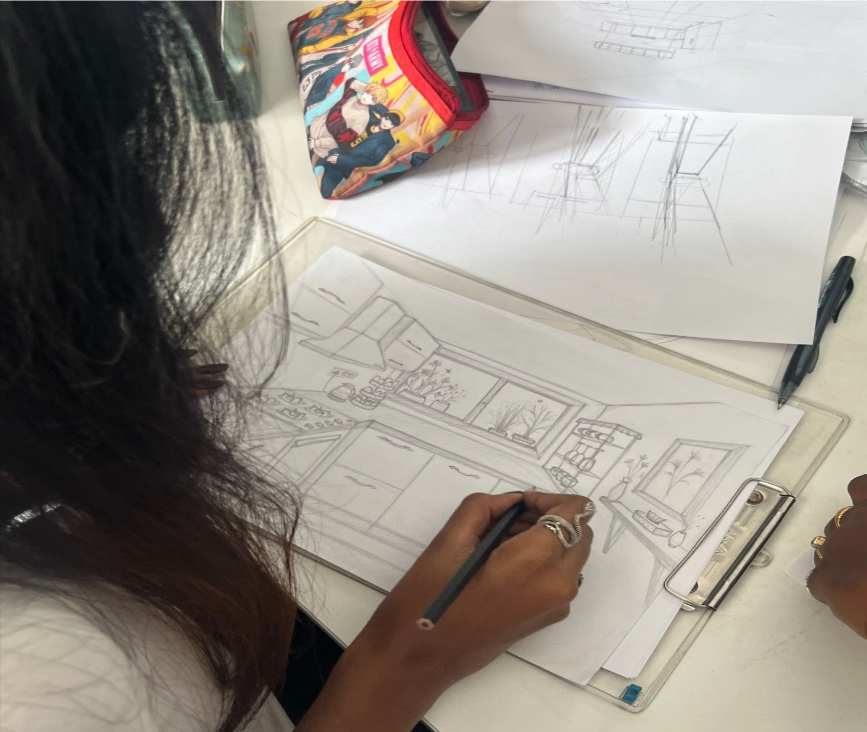
The work involves more than selecting furniture or colours. Interior designers consider spatial planning, circulation, lighting, materials, ergonomics, user requirements and coordination with other professionals.
What you may study:
- Space planning and interior layouts
- Furniture and material selection
- Lighting design
- Colour schemes and finishes
- Interior drafting and visualisation
- Building materials and construction basics
- Residential and commercial interior projects
Popular course options:
- B.Des in Interior Design
- B.Sc. in Interior Design
- B.A. or other undergraduate interior design programmes, where available
- Diploma in Interior Design
Career opportunities:
- Interior designer
- Residential space planner
- Commercial interior designer
- Furniture and furnishing designer
- Interior visualisation specialist
- Exhibition and retail space designer
Interior design may suit students who enjoy arranging spaces, studying architecture and interiors, working with materials and imagining how people use different environments.
Before applying, check whether the programme is design-focused, architecture-focused or intended as a vocational qualification. These routes can differ in scope and professional requirements.
5. UI/UX and Digital Product Design
UI/UX design focuses on how people interact with websites, mobile applications, software and other digital products.
User experience (UX) involves understanding users, their needs, their behaviour and the problems they encounter. User interface (UI) focuses on the visual and interactive elements through which people use a digital product.
Consider a food delivery application. Its UX includes how easily users can find restaurants, place an order and track delivery. Its UI includes the layout, buttons, icons, typography and visual components they interact with.
What you may study:
- User research and user behaviour
- Information architecture
- User journeys and wireframes
- Interface design and prototyping
- Usability testing
- Interaction design
- Design systems and accessibility
Popular course options:
- B.Des in Interaction Design
- B.Des in Digital Product Design
- B.Des in Communication Design with a digital specialisation
- Undergraduate programmes in UI/UX or related fields
- Relevant diplomas and certificates
The exact programme title varies between institutions. Some colleges offer UI/UX as a dedicated degree, while others teach it within a broader design programme.
Career opportunities:
- UI designer
- UX designer
- Product designer
- Interaction designer
- UX researcher
- Information architect
- Design systems designer
This field may suit students who enjoy understanding people, solving problems, organising information and designing digital experiences. Coding is not a universal entry requirement for design-focused UI/UX roles, although technical knowledge can be useful.
6. Animation, Game Design and Multimedia
Animation and multimedia bring ideas to life through movement, sound, images and interactive content. These fields are used in films, television, advertising, gaming, education and digital entertainment.
Students may specialise in areas such as 2D animation, 3D animation, character design, visual effects, game art or interactive media.
Game design is related but distinct: it focuses on the rules, systems, mechanics and experiences that make a game work. A game artist and a game designer may contribute to the same project while performing different roles.
What you may study:
- Drawing and visual storytelling
- Character and environment design
- Storyboarding
- 2D and 3D animation
- Digital modelling and texturing
- Motion graphics and visual effects
- Game mechanics and level design, for relevant programmes
Popular course options:
- B.Des in Animation
- B.Des in Game Design
- B.Sc. in Animation and Multimedia
- Undergraduate programmes in visual effects or digital media
- Diploma courses in animation and related fields
Career opportunities:
- 2D or 3D animator
- Character designer
- Storyboard artist
- Game artist
- Game designer
- Motion graphics designer
- Visual effects artist
- Multimedia designer
These fields may suit students who enjoy storytelling, characters, films, games, digital art or visual experimentation. The specific skills required depend on the chosen role, so reviewing student projects and course portfolios can help when comparing institutions.
7. Textile Design
Textile design focuses on creating patterns, structures and surface treatments for fabrics and other textile materials. It connects creative exploration with the practical properties and uses of materials.
Textile designers may work with apparel brands, home furnishing companies, textile manufacturers or studios developing specialised fabrics and surfaces.
What you may study:
- Fabric structures and textile fundamentals
- Surface pattern design
- Print design and colour development
- Weaving and other textile techniques
- Material exploration
- Textile sampling and product development
- Sustainable textile practices
Popular course options:
- B.Des in Textile Design
- B.Des in Textile and Surface Design
- B.Sc. in Textile Design, where offered
- Diploma programmes in textile design
Career opportunities:
- Textile designer
- Surface pattern designer
- Print designer
- Home furnishing designer
- Fabric development designer
- Textile product developer
Textile design may suit students who enjoy patterns, fabrics, colours, textures and experimentation with materials.
8. Accessory and Jewellery Design
Accessory and jewellery design involves developing products such as bags, footwear, watches, eyewear, jewellery and other personal accessories.
Depending on the programme, students may learn about materials, proportions, construction, ornamentation, ergonomics, production techniques and consumer preferences.
What you may study:
- Accessory concept development
- Jewellery sketching and visualisation
- Materials and manufacturing techniques
- Form, proportion and detailing
- Product development
- Market and trend research
- Digital modelling, where relevant
Popular course options:
- B.Des in Accessory Design
- B.Des in Jewellery Design
- B.Des in Fashion and Lifestyle Accessories
- Diploma programmes in jewellery or accessory design
Career opportunities:
- Jewellery designer
- Footwear designer
- Handbag designer
- Fashion accessories designer
- Product developer
- Design specialist for lifestyle brands
This field may appeal to students who enjoy detail-oriented work, materials, craftsmanship and creating products that combine function with personal expression.
Related: What are the 10 design careers that will be in demand even after 20 years?
9. Transportation and Automotive Design
Transportation design focuses on the appearance, form and user experience of vehicles and other mobility solutions. Automotive design is one area within this broader field.
Students may explore how a vehicle's shape, proportions, interior, materials and controls influence its identity and usability. Depending on the programme, the curriculum may also address future mobility and sustainability.
What you may study:
- Perspective drawing and visualisation
- Vehicle proportions and form development
- Concept sketching
- Surface modelling
- Interior and exterior design
- Human factors and ergonomics
- Digital modelling and prototyping
Popular course options:
- B.Des in Transportation Design
- B.Des in Automotive Design
- Other product or industrial design programmes with a mobility specialisation
Career opportunities:
- Transportation designer
- Automotive design specialist
- Vehicle interior designer
- Mobility concept designer
- Visualisation specialist
Transportation design is a specialised field. Students should check the availability of dedicated undergraduate programmes, admission requirements, studio facilities and portfolio expectations before choosing this path.
10. Architecture and Spatial Design
Architecture and spatial design explore how buildings and spaces are planned, experienced and used. These fields overlap with interior design in some areas, but they are not interchangeable.
Architecture involves the design of buildings and requires a specific educational and professional pathway in India. Spatial design may also cover exhibition spaces, installations, public environments and temporary structures, depending on the programme.
What you may study:
- Spatial planning and design principles
- Architectural drawing and visualisation
- Building materials and construction
- Environmental and climatic considerations
- Model making
- History and theory of architecture
- Digital design tools
Course options:
- Bachelor of Architecture (B.Arch)
- Undergraduate programmes in spatial or exhibition design
- Interior design programmes with a spatial planning focus
Career opportunities:
- Architect, after completing the required recognised qualifications and professional requirements
- Spatial designer
- Exhibition designer
- Interior space planner
- Architectural visualisation specialist
Students interested in becoming architects should review the current eligibility and admission requirements of the Council of Architecture and the institutions they wish to apply to. NATA and JEE Main Paper 2 are among the recognised examination routes used for B.Arch admissions, subject to the applicable rules for the admission year.
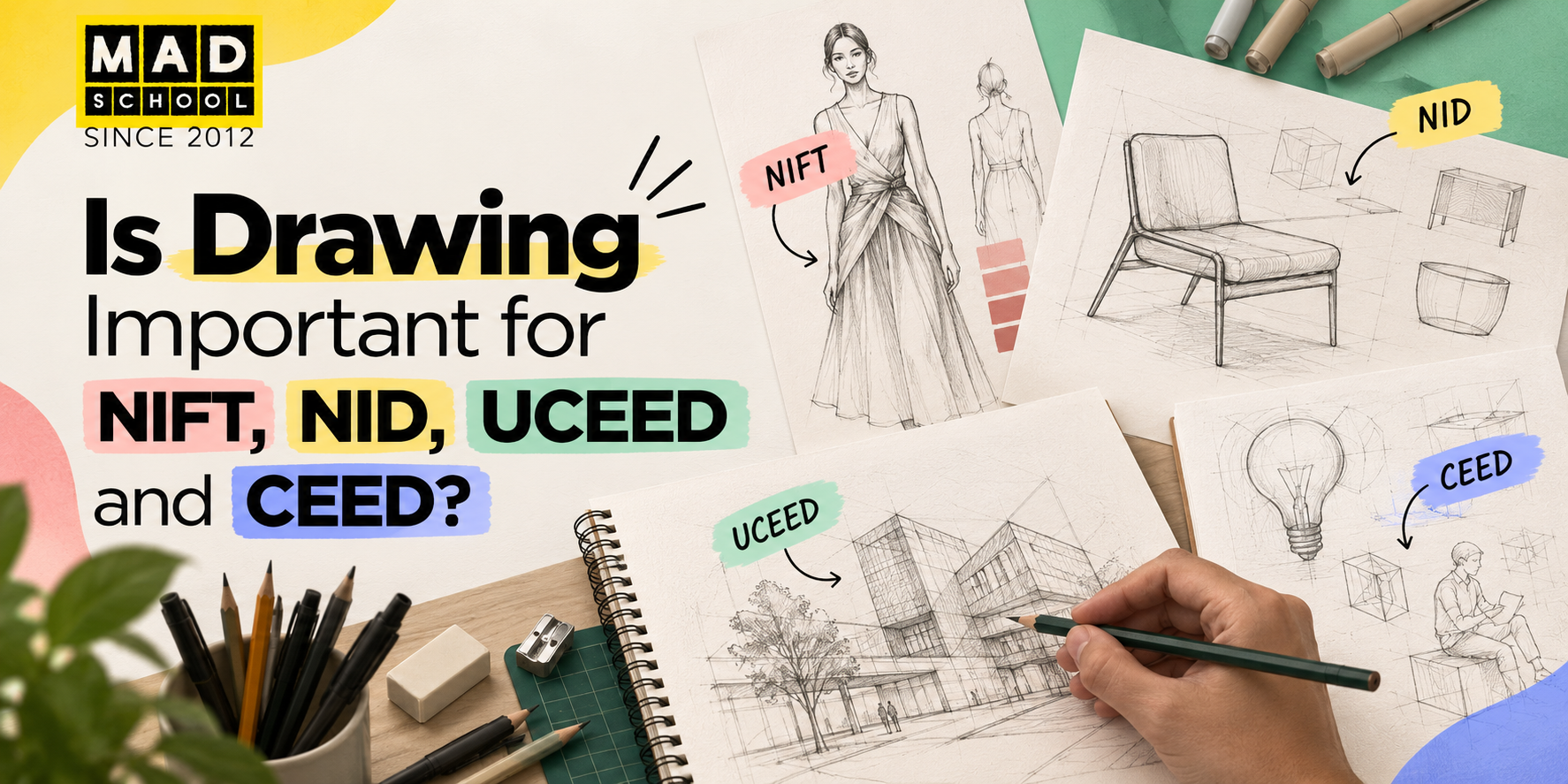
Related: Should I be good at drawing to pursue NIFT, UCEED/CEED or NID?
Quick Comparison: Which Design Course Should You Explore?
The following table can help you identify a starting point based on your interests.
|
Design field |
Best explored if you enjoy |
Example career paths |
|---|---|---|
|
Fashion Design |
Clothing, fabrics and styling |
Fashion designer, stylist |
|
Communication Design |
Graphics, typography and storytelling |
Graphic designer, brand designer |
|
Product Design |
Objects, invention and problem-solving |
Product designer, industrial designer |
|
Interior Design |
Spaces, furniture and materials |
Interior designer, space planner |
|
UI/UX Design |
Digital products and user behaviour |
UI designer, UX designer |
|
Animation and Game Design |
Characters, motion and interactive worlds |
Animator, game designer |
|
Textile Design |
Patterns, prints and materials |
Textile designer, print designer |
|
Accessory and Jewellery Design |
Small products, detail and craftsmanship |
Jewellery designer, accessory designer |
|
Transportation Design |
Vehicles, form and mobility |
Automotive designer, mobility designer |
|
Architecture and Spatial Design |
Buildings and spatial experiences |
Architect, spatial designer |
These are broad starting points, not fixed rules. For example, students interested in drawing may enjoy communication design, animation, product design or fashion design. The subject you enjoy is only one part of choosing a suitable course.
|
Specialisation |
Colleges to consider |
|---|---|
|
Fashion Design |
NIFT, Pearl Academy, UID, National Institute of Design (for relevant textile/apparel programmes) |
|
Communication and Graphic Design |
NID, Srishti Manipal Institute of Art, Design and Technology, IDC School of Design at IIT Bombay |
|
Product and Industrial Design |
NID, IDC School of Design at IIT Bombay, Department of Design at IIT Guwahati |
|
Interior Design |
Manipal Academy of Higher Education, Pearl Academy, CEPT University (verify the specific programme) |
|
UI/UX and Digital Product Design |
IDC School of Design at IIT Bombay, Srishti Manipal Institute, Department of Design at IIT Hyderabad |
|
Animation, Game Design and Multimedia |
Srishti Manipal Institute, relevant NID programmes, and universities offering dedicated animation or game design degrees |
|
Textile Design |
NIFT, NID, Srishti Manipal Institute |
|
Accessory and Jewellery Design |
NIFT, Indian Institute of Gems and Jewellery, and relevant specialised design institutions |
|
Transportation and Automotive Design |
IDC School of Design at IIT Bombay, and institutions offering dedicated transportation or mobility design programmes |
|
Architecture and Spatial Design |
CEPT University for architecture; relevant design schools for spatial and exhibition design |
What Are the Different Types of Design Degrees After Class 12?
After identifying a field, the next step is to understand the qualification you want to pursue.
Bachelor of Design (B.Des)
The Bachelor of Design is a common undergraduate degree for students seeking a professional education in design. Depending on the institution, specialisations may include fashion, communication, product, textile, interaction, industrial or other design fields.
Many B.Des programmes combine foundation studies with specialised studio projects. The course duration, structure and admission process vary by institution.
Bachelor of Science (B.Sc.) in Design-Related Fields
Some institutions offer B.Sc. degrees in areas such as fashion, interior design, animation, multimedia or related subjects.
The balance between creative studio work, technical learning and theory differs across programmes. Students should compare actual syllabuses rather than relying on the degree title alone.
Bachelor of Arts (B.A.) in Design-Related Fields
Certain colleges offer B.A. programmes in areas such as graphic design, visual communication or related creative disciplines.
These programmes may emphasise visual communication, media, creative practice or a combination of practical and theoretical subjects, depending on the institution.
Diploma and Certificate Programmes
Diploma and certificate courses can provide focused training in a specific area, such as interior design, fashion, graphic design or animation.
They may be suitable for students who want shorter-term training or a particular skill set. However, they should not automatically be considered equivalent to a bachelor's degree. Check the qualification awarded, course duration, recognition, curriculum and progression opportunities before enrolling.
Important: A course's name alone does not tell you whether it is the right choice. Compare the subjects taught, studio facilities, faculty, industry exposure, student work and qualification awarded.
Which Design Entrance Exams Should You Know About?
Several design institutions use entrance examinations to assess a student's creative thinking, observation, visualisation, problem-solving and other relevant abilities. The required examination depends on the institution and programme.
Here are some important examination routes to explore.
NID DAT
The National Institute of Design's Design Aptitude Test is used for admission to specified programmes at NID. The selection process, examination stages and eligibility requirements depend on the programme and admission year.
Students interested in communication, industrial, textile or other design specialisations offered by NID should consult the official admission brochure.
NIFT Entrance Examination
The National Institute of Fashion Technology conducts admission processes for its programmes according to the applicable admission rules. The examination and selection components differ by course.
Students interested in fashion design, accessory design, textile design and other NIFT programmes should verify the current examination pattern and eligibility criteria.
UCEED
The Undergraduate Common Entrance Examination for Design is an entrance examination used for admission to specified undergraduate design programmes at participating institutions.
It assesses aspects of design aptitude and related abilities. Students should check the current list of participating institutes and their individual admission requirements, as qualifying for an examination does not necessarily guarantee admission to every participating programme.
NATA and JEE Main Paper 2
Students interested in B.Arch programmes may need to consider NATA or JEE Main Paper 2, depending on the institution and the applicable admission route.
Architecture has specific eligibility and qualification requirements, so students should not assume that the entrance exams used for B.Des programmes are interchangeable with those for B.Arch.
Institute-Specific Entrance Exams
Many colleges have their own admission tests, portfolio reviews, interviews or other selection requirements. Some programmes also consider academic performance.
Before preparing for an entrance exam, make a shortlist of institutions and courses, then check their official admission requirements for the year you plan to apply.
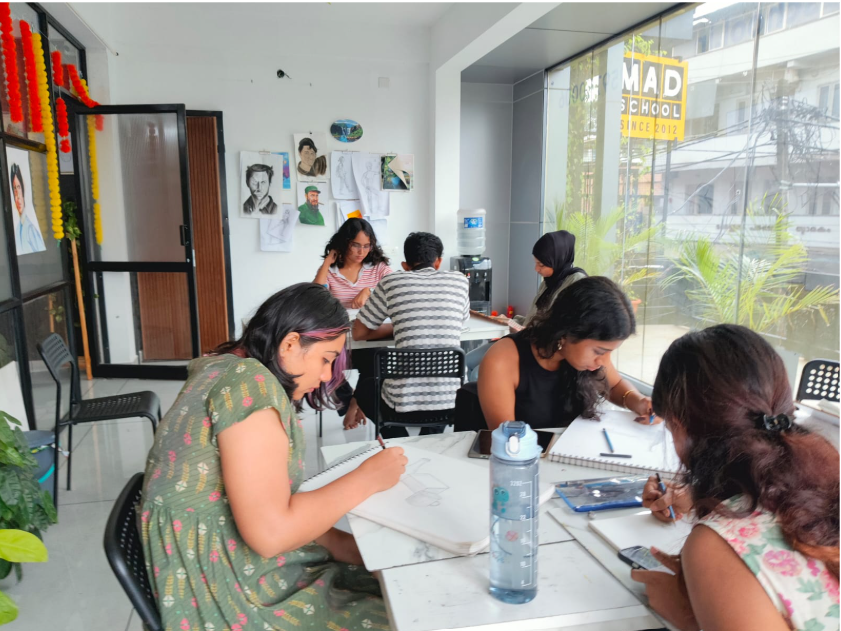
Students can also explore MAD School's design entrance exam coaching programmes for guidance on preparation for relevant design entrance examinations. The appropriate preparation route depends on the student's target course and institution.
How to Choose the Right Design Specialisation
With so many options, it is easy to choose a course because it is popular or because someone else recommends it. A better approach is to understand what you enjoy, what you want to learn and what the programme actually involves.
1. Start With Your Interests
Think about the activities that naturally attract your attention.
Do you notice how a website is arranged? Do you enjoy sketching products? Are you interested in clothing and materials? Do you often rearrange spaces or imagine how an object could work better?
These interests can help you identify fields worth exploring. You do not need to have a final answer immediately.
2. Understand the Work Behind Each Field
A course may sound exciting, but the day-to-day work may be different from what you imagine.
Fashion design includes materials and garment construction. UI/UX design involves research and testing, not just screen layouts. Product design includes usability, prototyping and practical constraints. Animation requires patience, technical practice and an understanding of movement and storytelling.
Look beyond the name of the specialisation and investigate the subjects students actually study.
3. Review the Course Curriculum
Compare the syllabus of at least two or three institutions offering the course you are considering.
Look for information about foundation subjects, studio projects, software or technical training, internships, industry exposure and final-year projects. Also check whether the programme offers opportunities to explore related fields before committing to a specialisation.
4. Explore Student Portfolios and Projects
Student work can reveal a great deal about a programme.
Look at final-year projects, design portfolios, prototypes, illustrations, digital interfaces and other examples of student output. Notice whether the work matches the kind of problems and creative activities you would like to explore.
A strong portfolio is not simply a collection of attractive images. It can also show research, idea development, experimentation and the reasoning behind a design decision.
5. Check Eligibility and Entrance Requirements
Do not wait until the application deadline to discover that a course has a subject requirement or a separate admission process.
Check the qualifying examination, minimum marks, age criteria where applicable, entrance examination, portfolio requirements and important dates. Always use the current official admission information.
6. Consider Career Paths Without Limiting Yourself Too Early
It is useful to understand the roles associated with a specialisation, but your first degree does not always determine your entire career.
Designers may move into related fields as they develop new skills. A communication designer may work in digital product design, for example, while a product designer may later focus on research or service design.
Build a foundation that interests you and look for opportunities to develop transferable skills.
Do You Need to Be Good at Drawing to Study Design?
Not necessarily. Drawing can be an important skill in many design disciplines, but design involves much more than producing polished sketches.
Observation, creative thinking, problem-solving, research, visual communication and the ability to develop ideas are also important. The relevance of drawing depends on the specialisation and the course's admission requirements.
For some entrance examinations, freehand drawing, visualisation or sketching may form part of the assessment. Other tasks may focus more on reasoning, observation, design aptitude or problem-solving.
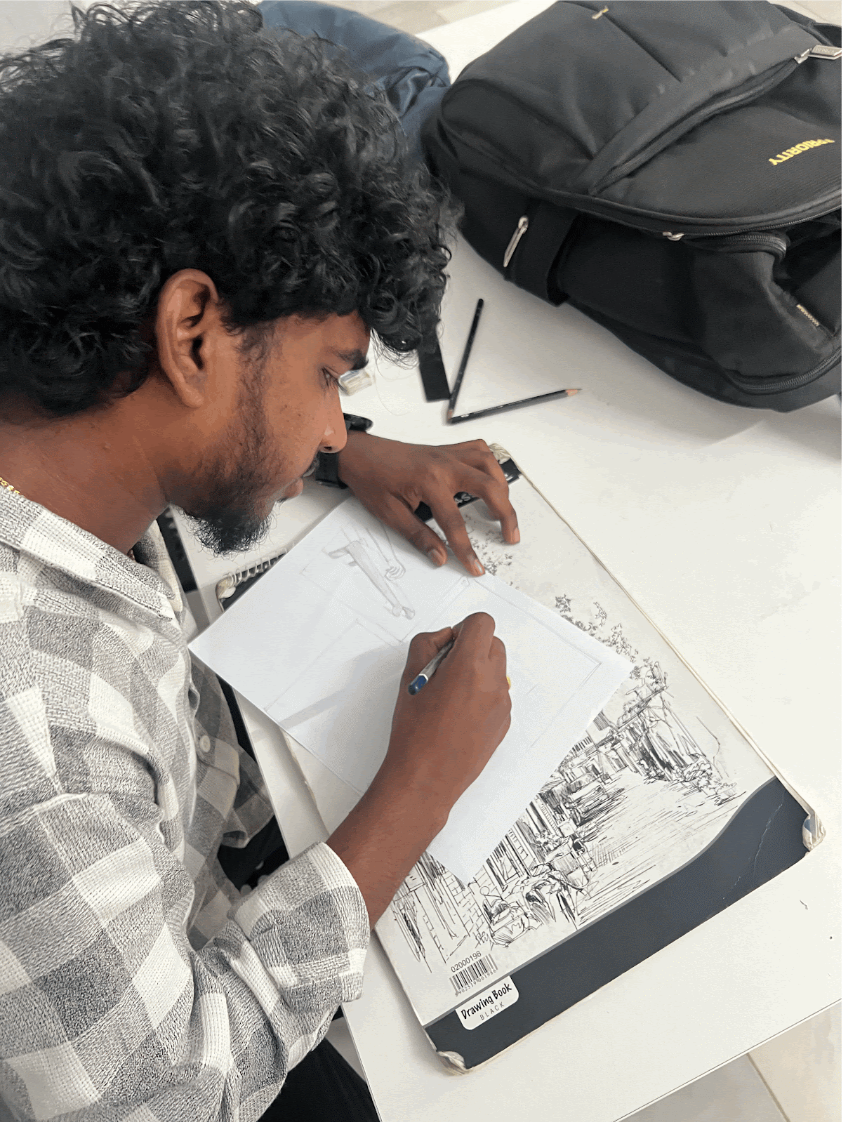
Students who feel their drawing skills need improvement can practise through regular observation exercises, basic forms, perspective, composition and timed sketching. You do not need to master every technique before you begin exploring design.
Read more about whether drawing skills are necessary for NIFT, NID, UCEED/CEED Exams and how students can start developing their creative abilities.
What Skills Should You Develop Before Joining a Design Course?
You do not need to master every design skill before college. However, developing a few foundational abilities can help you approach design education with greater confidence.
Observation: Learn to notice shapes, patterns, colours, materials, spaces and the way people interact with objects.
Creative thinking: Practise generating multiple ideas rather than stopping at the first solution.
Problem-solving: Ask what problem a product, space, graphic or digital experience is trying to solve.
Visual communication: Explore sketching, diagrams, layouts or other ways to communicate an idea clearly.
Research: Learn to gather information, understand users and examine existing solutions before developing your own.
Communication and collaboration: Design projects often involve explaining decisions, receiving feedback and working with others.
Openness to feedback: An early idea is rarely the final one. Testing, reviewing and improving are important parts of the design process.
You can develop these abilities through everyday observation, personal projects, creative exercises and structured entrance-exam preparation.
Career Opportunities After Completing a Design Course
Design graduates can work across a wide range of industries. Their opportunities depend on their specialisation, practical skills, portfolio, experience and the needs of employers.
Some graduates work in design studios, agencies, technology companies, fashion brands, manufacturing businesses, architecture and interior firms, entertainment companies or in-house creative teams. Others pursue freelance projects or build their own businesses.
Examples of career directions include:
- Fashion and lifestyle: Fashion design, styling, textile development and merchandising.
- Branding and media: Graphic design, illustration, packaging, advertising and art direction.
- Technology: UI/UX design, interaction design, product design and user research.
- Manufacturing and consumer products: Industrial design, product development and furniture design.
- Built environments: Interior design, spatial planning and architecture through the appropriate professional pathway.
- Entertainment and gaming: Animation, game art, motion graphics and visual effects.
Career titles and responsibilities vary between companies. Some roles require additional technical skills or postgraduate study, while others place greater emphasis on portfolio quality and practical experience.
Rather than choosing a course based only on expected salary or job titles, investigate the kind of work you would like to do and the skills required to enter that field.
Frequently Asked Questions
There is no single best design course for everyone. Fashion, communication, product, interior, UI/UX, animation and other fields suit different interests. Compare the course curriculum, admission requirements and potential career paths before deciding.
Yes, students from Commerce and Arts backgrounds can apply to many design programmes, subject to the specific eligibility criteria. Some courses, including architecture, have additional academic and admission requirements.
Yes. Science students can explore fashion, communication, product, animation and many other design fields if they meet the relevant programme requirements.
Neither qualification is automatically better. The right choice depends on the institution, curriculum, practical learning opportunities, faculty, recognition and the specialisation offered. Compare the actual programmes rather than the degree names alone.
That depends on the course and institution. Students considering design programmes may explore NID DAT, NIFT's admission examination, UCEED and institute-specific tests. Students interested in B.Arch should separately review NATA and JEE Main Paper 2 requirements.
Yes, many design fields involve skills beyond drawing. However, some courses and entrance examinations assess sketching or visualisation. Check the requirements for your target programme and practise the relevant skills.
They can be useful for focused training, depending on the course quality and your goals. Check the qualification awarded, duration, recognition, practical training and opportunities for further study before enrolling.
Review the curriculum, faculty, studio facilities, student projects, internships, industry connections, admission requirements and the qualification awarded. Speaking with current students or alumni can also help you understand the learning experience.
Starting during Class 11 or earlier can give you time to develop observation, reasoning, visualisation and creative problem-solving skills. Class 12 students can also prepare with a structured plan that takes their target examinations and remaining time into account.
It depends on the institution and programme structure. Some courses provide a common foundation before specialisation, while others require students to choose a specific field at admission. Check the programme's flexibility before applying.
Final Thoughts
Choosing a design course after Class 12 is about finding the right fit between your interests, the kind of problems you enjoy solving and the skills you want to develop.
Explore different specialisations, compare college curricula, review student projects and understand the entrance requirements before making a decision. You do not have to know your entire career plan today, but you should take time to understand the options available to you.
If you are planning to apply to design colleges, begin by shortlisting the programmes that interest you and identifying their admission requirements. A clear preparation plan can help you work towards the entrance examinations and build the skills you need.
At MAD School, students can explore preparation support for relevant design entrance examinations, including NID, NIFT, UCEED and other programmes. The first step is to identify your target course and build your preparation around its requirements.