10 Design Careers That Could Still Be in Demand 20 Years From Now
What if the career you choose today is still relevant 20 years from now?
For students planning their future after Class 12, this is an important question. You want a career that interests you, allows you to grow and gives you opportunities to learn and adapt as the world changes.
Technology is evolving, artificial intelligence is changing creative work, cities are expanding, and people are becoming more conscious of how products are made and resources are used. Businesses are also looking for better ways to connect with customers, improve products and solve everyday problems.
So, where does design fit into all this?
Design is much more than drawing, decorating or making something look attractive. It involves understanding people, identifying problems and developing solutions that are useful, functional and meaningful. Designers influence the products we use, the clothes we wear, the spaces we occupy, the information we understand and the digital experiences we interact with every day.
As technology advances, design tools and job responsibilities will change. Some routine tasks may become automated, while new specialisations may emerge. However, the ability to think creatively, understand people, evaluate ideas and solve problems can remain valuable across industries.
The World Economic Forum's Future of Jobs Report 2025 identifies creative thinking, technological literacy and curiosity and lifelong learning among the skills employers expect to remain important or grow in importance through 2030. It also highlights environmental stewardship as an emerging skill area. These trends offer useful context for considering future careers, although they cannot predict exactly which design jobs will be in demand in 2046.
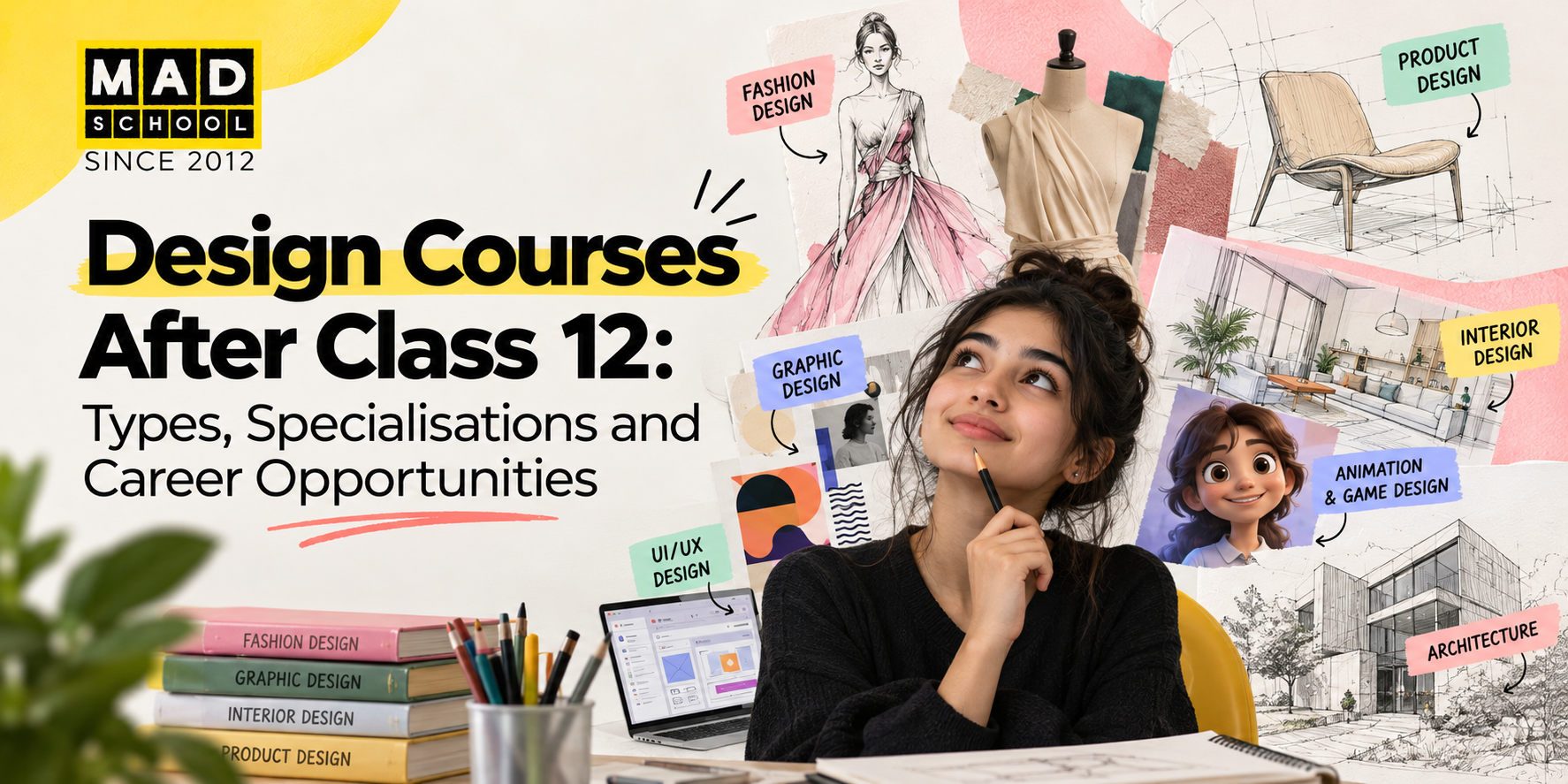
In this article, we explore 10 design careers that could remain relevant over the next 20 years, what professionals in each field do, the skills they need and the courses students can explore after Class 12.
Why Could Design Careers Remain Relevant in the Future?
Before exploring individual careers, let's look at why design skills are useful across different industries.
1. People will continue to need better solutions
From everyday household products to public transport systems, people need things that work well and solve real problems. Designers help identify those problems and develop practical solutions.
2. Technology needs people who understand people
AI and automation can help generate concepts, analyse information and speed up production. But designing something useful also requires understanding the people who will use it, the context in which it will be used and the problems it needs to solve.
3. Businesses need to communicate clearly
Products and services must be explained, presented and experienced in ways people can understand. Visual communication, branding, digital interfaces and customer experiences all involve design.
4. Sustainability is influencing design decisions
Businesses and communities are exploring ways to reduce waste, use resources more efficiently and make products and spaces more sustainable. Designers can contribute to these efforts through material choices, product development and systems thinking.
5. New technologies create new design challenges
Connected devices, AI-powered products, digital entertainment and emerging interfaces create opportunities for designers to rethink how people interact with technology.
These factors do not guarantee demand for every design specialisation. They do, however, show why developing transferable design skills can be useful when preparing for a changing career landscape.
10 Design Careers That Could Still Be Relevant 20 Years From Now
1. UI/UX Designer
Focus: Digital experiences, applications and websites
Almost everything we do today involves some form of digital interaction. We book tickets, shop online, attend classes, transfer money and access services through websites and applications.
But have you ever stopped using an app because it was confusing? Or struggled to find a feature on a website?
UI/UX designers work to prevent these problems.
UI stands for User Interface. UI designers focus on the visual and interactive elements of a digital product, such as layouts, buttons, typography, colours and screen design.
UX stands for User Experience. UX designers focus on the broader experience, including how users navigate a product, complete tasks and interact with its features.
In many organisations, UI and UX responsibilities overlap, while larger teams may have separate specialists.
What does a UI/UX designer do?
- Research user needs and understand customer behaviour.
- Create wireframes, user flows and interactive prototypes.
- Design website and application interfaces.
- Test designs and identify usability problems.
- Improve accessibility and make digital experiences easier to use.
- Work with developers, product managers and other designers.
Why could this career remain relevant?
As digital services and AI-powered products develop, people will need ways to interact with increasingly complex technology. Designers who can make these experiences understandable, accessible and useful may find opportunities across industries.
AI may automate some interface production, so understanding user needs, conducting research and making thoughtful design decisions will be important differentiators.
Skills to develop
- Visual hierarchy and layout
- User research and usability testing
- Wireframing and prototyping
- Interaction design
- Accessibility principles
- Digital design tools and AI-assisted workflows
Courses to explore after Class 12
B.Des programmes in Interaction Design, UX Design, Communication Design or related areas, depending on the institution.
Potential career opportunities
UI designer, UX designer, interaction designer, digital product designer and UX researcher.
Best suited for: Students who enjoy technology, psychology, problem-solving and making digital products easier to use.
2. Product Designer
Focus: Physical products and everyday objects
Look around your home. Your chair, water bottle, headphones, laptop, kitchen appliances and furniture have all been designed.
Product designers work on the appearance, function, usability and practical development of physical products. Their job is not simply to make something attractive. They must consider how it will be used, what materials it requires, how it can be manufactured and whether it solves the intended problem.
For example, designing a school bag involves more than selecting a colour. The designer must consider weight distribution, comfort, storage, durability and the needs of the student using it.
What does a product designer do?
- Identify problems that a product could solve.
- Study users and understand how they interact with objects.
- Sketch and develop different design concepts.
- Explore materials, shapes, ergonomics and functionality.
- Create models and prototypes.
- Work with engineers and manufacturers to develop practical solutions.
Why could this career remain relevant?
People and industries will continue to use physical products, although the products themselves may change. Connected devices, assistive products, repairable objects and resource-efficient consumer goods are examples of areas where design thinking can contribute.
Designers who understand both user needs and manufacturing constraints can help turn concepts into products that work in real life.
Skills to develop
- Sketching and visualisation
- Three-dimensional thinking
- Model making and prototyping
- Ergonomics
- Materials and manufacturing knowledge
- CAD and 3D modelling
- Critical thinking and problem-solving
Courses to explore after Class 12
B.Des in Product Design, Industrial Design or related programmes.
Potential career opportunities
Product designer, industrial product designer, furniture designer, consumer electronics designer and design development specialist.
Best suited for: Students who enjoy observing everyday objects, building things, experimenting with forms and finding ways to make products work better.
Related: Product design career in india
3. Interior Designer
Focus: Functional, comfortable and visually engaging spaces
Interior design is often associated with furniture, colours and decoration. In reality, it involves much more.
Interior designers plan how spaces are organised and used. They consider movement, lighting, materials, storage, acoustics, comfort, accessibility and the needs of the people who occupy a space.
A well-designed classroom can support learning. A thoughtfully planned home can make everyday routines easier. A well-organised hospital interior can help patients and staff navigate the environment.
These decisions make interior design both a creative and practical discipline.
What does an interior designer do?
- Understand the client's needs and requirements.
- Plan room layouts and circulation.
- Select materials, finishes, lighting and furniture.
- Create drawings, mood boards and 3D visualisations.
- Coordinate with contractors and other professionals.
- Consider safety, accessibility, budgets and practical constraints.
Why could this career remain relevant?
People will continue to live, work, learn, shop and spend time in physical spaces. As lifestyles and working patterns change, homes, offices, retail spaces and public environments may need to adapt.
Designers who combine visual creativity with space planning, technical knowledge and an understanding of how people use spaces can work across a range of projects.
Skills to develop
- Space planning
- Perspective drawing and visualisation
- Colour and composition
- Materials and finishes
- Lighting fundamentals
- CAD and 3D modelling
- Communication and project coordination
Courses to explore after Class 12
B.Des in Interior Design, Interior Architecture or related spatial design programmes. Course titles and professional requirements vary by institution. If you’re looking for an interior design diploma course in hyderabad, mad school is more than happy to help you with a free one on one counseling.
Potential career opportunities
Interior designer, residential interior designer, commercial interior designer, retail space designer and exhibition space designer.
Best suited for: Students who enjoy arranging spaces, understanding how people use environments and balancing creativity with practical requirements.
4. Communication Designer
Focus: Communicating ideas through visual and other media
How does a public awareness campaign explain an important message? How does an organisation communicate a complex idea to a broad audience? How can information be presented so people understand it quickly?
Communication designers work on questions like these.
They use visual elements, typography, images, layout, storytelling and other communication methods to make messages clear and meaningful. Depending on their specialisation, they may work on branding, campaigns, editorial design, digital communication or information design.
Communication design is a broad field. Graphic design is one of the disciplines that may sit within it, but the two terms are not identical.
What does a communication designer do?
- Understand the audience and communication objective.
- Develop concepts for visual messages.
- Use typography, colour, layout and imagery effectively.
- Design campaigns, publications and digital communication.
- Maintain consistency across different communication materials.
- Work with writers, marketers, researchers and other creative professionals.
Why could this career remain relevant?
Organisations will continue to need ways to explain ideas, communicate with audiences and make information understandable. As the volume of digital content grows, the ability to create clear and purposeful communication can be valuable.
AI tools can generate visual options quickly, but designers still need to decide what should be communicated, how to reach a particular audience and whether the message is accurate and appropriate.
Skills to develop
- Visual storytelling
- Typography and layout
- Research and conceptual thinking
- Information hierarchy
- Audience understanding
- Presentation and communication
- Digital design tools
Courses to explore after Class 12
B.Des in Communication Design, Visual Communication or related programmes.
Potential career opportunities
Communication designer, visual communication designer, brand communication designer, campaign designer and information designer.
Best suited for: Students who enjoy storytelling, understanding audiences and turning ideas into clear visual messages.
Related: What are the design career i can choose after 12th?
5. Graphic Designer
Focus: Visual content, branding and graphic communication
From packaging and advertisements to social media graphics, book covers and website visuals, graphic design influences how people see and understand information.
Graphic designers use visual elements to communicate a message, establish a visual identity or guide an audience's attention. Their work may be printed, displayed digitally or used across several platforms.
For example, a product's packaging must attract attention while communicating essential information. A book cover must give the reader a sense of its subject or mood. A brand's visual identity needs to remain recognisable across different applications.
What does a graphic designer do?
- Develop visual concepts for communication.
- Create layouts, illustrations and graphics.
- Work with typography, colours, shapes and imagery.
- Design posters, packaging, publications and digital assets.
- Apply brand guidelines consistently.
- Prepare files for print and digital use.
Why could this career remain relevant?
Businesses, educational institutions, publishers and organisations will continue to communicate through visual media. However, AI-assisted tools may make routine graphic production faster and more accessible.
Graphic designers can strengthen their career prospects by developing conceptual thinking, visual judgement, brand understanding and the ability to create work that meets a specific communication goal.
Skills to develop
- Drawing and visual observation
- Typography
- Composition and layout
- Colour theory
- Illustration
- Branding fundamentals
- Digital design software
- Understanding of print and digital production
Courses to explore after Class 12
B.Des in Graphic Design, Communication Design, Visual Communication or related programmes.
Potential career opportunities
Graphic designer, brand identity designer, packaging designer, publication designer, digital graphic designer and illustrator.
Best suited for: Students who enjoy visual creativity, typography, illustration and communicating ideas through images and layouts.
6. Fashion Designer
Focus: Clothing, accessories and fashion collections
Fashion is influenced by culture, lifestyle, technology, identity and changing consumer preferences. While trends come and go, people will continue to need clothing and products suited to different activities, environments and occasions.
Fashion designers research these needs and develop garments or collections. Their work may involve casual wear, formal clothing, sportswear, adaptive clothing, luxury fashion or other categories.
A fashion designer must consider much more than appearance. Fit, fabric, construction, comfort, durability, cost and production are all important parts of the process.
What does a fashion designer do?
- Research trends, customers and cultural influences.
- Develop concepts and garment sketches.
- Select fabrics, colours, patterns and materials.
- Create or work with technical specifications.
- Coordinate with pattern makers, sampling teams and manufacturers.
- Refine designs based on fit, function and production requirements.
Why could this career remain relevant?
Clothing is a basic human need, while fashion also serves functional and expressive purposes. Designers may contribute to new developments in performance clothing, adaptive fashion, material innovation and more responsible production.
The industry is competitive and can be affected by changing trends and consumer spending. Strong technical skills, creative direction and commercial awareness can therefore be as important as originality.
Skills to develop
- Fashion illustration and sketching
- Fabric and textile knowledge
- Colour and pattern development
- Garment construction fundamentals
- Research and trend analysis
- Digital fashion tools
- Understanding of manufacturing and consumers
Courses to explore after Class 12
B.Des in Fashion Design, Apparel Design, Textile Design or other relevant fashion programmes.
Potential career opportunities
Fashion designer, apparel designer, costume designer, fashion product developer, textile designer and fashion entrepreneur.
Best suited for: Students who enjoy clothing, fabrics, trends, experimentation and exploring how people express themselves through what they wear.
7. Animation and Game Designer
Focus: Digital storytelling, animation and interactive entertainment
Animated films, video games, educational simulations and digital experiences rely on creative professionals who can develop characters, environments, stories and interactions.
Animation and game design are related, but they involve different responsibilities. Animation focuses on creating movement and bringing characters or objects to life. Game design focuses on the rules, mechanics, challenges and player experience that make a game work.
Depending on the role, designers may also collaborate with illustrators, animators, developers, writers and sound professionals.
What does an animation and game designer do?
- Develop characters, environments and visual concepts.
- Create storyboards and visual sequences.
- Plan how characters and objects move.
- Develop game mechanics, levels and player challenges.
- Design interactive experiences.
- Collaborate with artists, animators and programmers.
Why could this career remain relevant?
Entertainment and interactive media continue to evolve across games, film, education, advertising and other sectors. New technologies may create additional ways to tell stories and build immersive experiences.
However, this is a competitive field, and the demand for particular roles can change. Designers who understand storytelling, visual fundamentals, interaction and the technical requirements of production may be better prepared to adapt.
Skills to develop
- Drawing and visual storytelling
- Character and environment design
- Storyboarding
- Animation principles
- Game mechanics and level design
- Digital modelling and animation tools
- Collaboration and iterative problem-solving
Courses to explore after Class 12
B.Des programmes in Animation, Game Design, Animation and VFX, Digital Media or related fields, depending on the institution.
Potential career opportunities
Animation designer, character designer, game designer, level designer, storyboard artist, environment artist and interactive media designer.
Best suited for: Students who enjoy stories, characters, games, drawing, digital media and creating experiences that people can explore.
8. Industrial and Transportation Designer
Focus: Vehicles, mobility products and functional industrial products
How should a vehicle be shaped to improve its usability? How can a mobility product be made more comfortable? How might a product's form, function and materials work together?
Industrial and transportation designers explore these kinds of questions.
Industrial design is concerned with the development of manufactured products. Transportation design focuses more specifically on vehicles and mobility, including aspects such as form, user experience, ergonomics and the relationship between people and the vehicle.
Depending on the project, designers may work alongside engineers, manufacturers, material specialists and other professionals.
What does an industrial or transportation designer do?
- Research users, products and market requirements.
- Sketch and develop concepts.
- Explore form, proportion, ergonomics and usability.
- Create digital models and physical prototypes.
- Consider materials, manufacturing and practical constraints.
- Collaborate with engineering and development teams.
Why could this career remain relevant?
People and businesses will continue to need products and transportation systems. The transition towards electric vehicles, changing mobility needs and developments in manufacturing may create new design challenges.
These developments do not guarantee employment growth for every specialisation. But professionals who can combine user-centred design, technical understanding and practical problem-solving may be able to contribute to evolving industries.
Skills to develop
- Sketching and perspective
- Three-dimensional visualisation
- Form development
- Ergonomics
- CAD and 3D modelling
- Materials and manufacturing knowledge
- Technical communication
Courses to explore after Class 12
B.Des in Industrial Design, Transportation Design, Mobility Design or Product Design, where offered.
Potential career opportunities
Industrial designer, transportation designer, mobility designer, automotive design professional and product development designer.
Best suited for: Students interested in vehicles, machines, physical products, form development and the relationship between design and engineering.
9. Sustainable Design Specialist
Focus: Reducing environmental impact through design decisions
Sustainability is increasingly relevant to conversations about products, buildings, packaging, clothing and the use of resources.
Sustainable design considers how a product or environment affects resources and the environment throughout its lifecycle. This can include the materials used, manufacturing processes, energy consumption, durability, maintenance, repair, reuse and disposal.
For example, a designer might explore packaging that uses less material, furniture that is easier to repair, textiles with more responsible sourcing or products designed to last longer.
Sustainable design is not limited to one industry. It can be incorporated into product design, industrial design, fashion, interiors, architecture and other fields.
What does a sustainable design specialist do?
- Research materials and their environmental implications.
- Explore ways to reduce waste and resource use.
- Consider product durability, repair and reuse.
- Develop concepts for more resource-efficient products or systems.
- Work with engineers, manufacturers and sustainability specialists.
- Balance environmental considerations with cost, performance and user needs.
Why could this career remain relevant?
Environmental concerns, resource efficiency and climate-related challenges are influencing decisions across many sectors. The World Economic Forum's 2025 report identifies environmental stewardship as a skill expected to grow in importance by 2030. That is a useful near-term signal, although it is not a direct forecast of the number of sustainable design jobs in 2046.
Designers who understand materials, lifecycle thinking and practical sustainability considerations may be able to contribute to projects across industries.
Skills to develop
- Research and critical thinking
- Materials knowledge
- Lifecycle and circular design principles
- Systems thinking
- Product or spatial design fundamentals
- Understanding of manufacturing and resource use
- Collaboration across disciplines
Courses to explore after Class 12
B.Des in Product Design, Industrial Design, Fashion Design, Textile Design or other relevant disciplines. Students can also explore specialised sustainability programmes and related architecture pathways.
Potential career opportunities
Sustainable product designer, circular design specialist, sustainable packaging designer, responsible materials specialist and sustainability-focused design consultant. Job titles and qualifications vary by employer.
Best suited for: Students who enjoy problem-solving and want to explore how products, materials and systems can be designed with greater environmental consideration.
Related: Top Fashion Design Colleges In Bengaluru
10. Design Researcher and Design Strategist
Focus: Understanding people, identifying problems and guiding design decisions
Not every designer spends most of their time drawing, creating graphics or modelling products. Some professionals focus on understanding why a problem exists and deciding what should be designed in the first place.
Design researchers investigate people, their behaviours, needs and experiences. They may conduct interviews, observe users, analyse feedback and identify patterns that help teams understand a problem.
Design strategists use research and broader business or organisational context to help define opportunities, priorities and possible directions for design.
These roles can overlap, but they are not identical. Research focuses on generating and interpreting evidence, while strategy uses insights to inform decisions and direction.
What does a design researcher or strategist do?
- Interview users and observe their behaviour.
- Identify recurring problems and unmet needs.
- Analyse research findings and organise insights.
- Map customer journeys and experiences.
- Help teams define design challenges.
- Evaluate concepts and inform product or service decisions.
- Connect user needs with organisational goals.
Why could this career remain relevant?
As products, services and technologies become more complex, organisations need to understand the people they serve and the problems worth solving. Research and strategy can help teams avoid investing time and resources in solutions that do not address real needs.
AI may help analyse large amounts of information, but collecting reliable evidence, understanding context, evaluating findings and making responsible decisions remain important parts of the process.
These roles often require experience, strong research skills and the ability to work across disciplines. Students should view them as possible long-term pathways rather than assume they are always entry-level positions.
Skills to develop
- Observation and interviewing
- Research methods
- Analytical and critical thinking
- Empathy and communication
- Systems thinking
- Data interpretation
- Presentation and decision-making
Courses to explore after Class 12
B.Des in Communication Design, Product Design, Interaction Design or related fields can provide a foundation, depending on the programme. Further specialisation in design research or strategy may come through projects, work experience or postgraduate study.
Potential career opportunities
Design researcher, UX researcher, service designer, design strategist and customer experience researcher.
Best suited for: Students who enjoy understanding people, investigating problems, analysing information and deciding how an idea can be improved.
Related: Future of the design career in India?
Which Design Career Is Right for You?
The ten careers in this article offer different ways to apply creative thinking. You do not need to choose the one that sounds most futuristic. Start with the type of problems you enjoy solving.
|
If you enjoy… |
Explore these careers |
|---|---|
|
Apps, websites and digital experiences |
UI/UX Designer |
|
Making physical objects work better |
Product Designer |
|
Planning homes and other spaces |
Interior Designer |
|
Visual storytelling and communication |
Communication Designer |
|
Graphics, typography and branding |
Graphic Designer |
|
Clothing, fabrics and fashion |
Fashion Designer |
|
Characters, animation and games |
Animation and Game Designer |
|
Vehicles, mobility and manufactured products |
Industrial and Transportation Designer |
|
Materials, reuse and environmental challenges |
Sustainable Design Specialist |
|
Researching people and solving complex problems |
Design Researcher and Design Strategist |
These are starting points, not strict boundaries. Some designers work across multiple areas, and the right path may become clearer as you study, complete projects and gain experience.
What Skills Will Future Designers Need?
The tools used by designers will change. The fundamentals that help them think clearly, understand problems and develop useful solutions are likely to remain important.
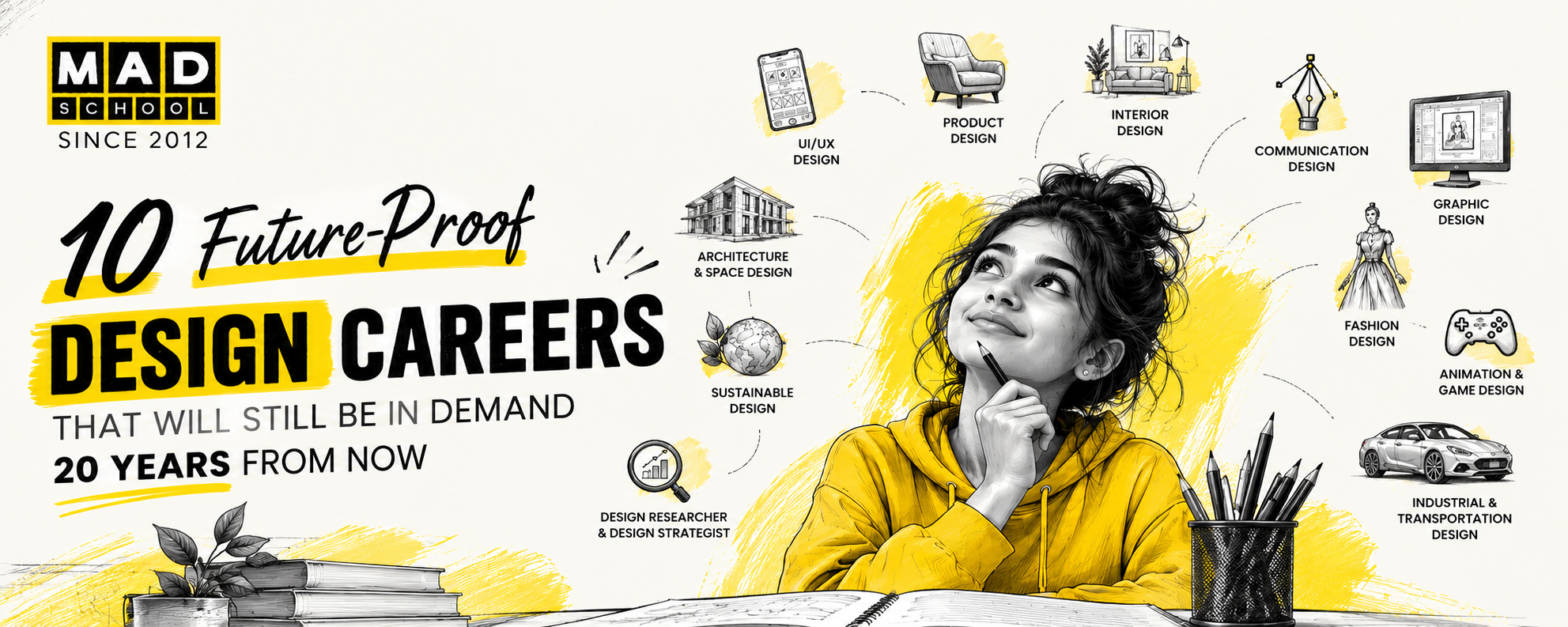
The MAD School infographic highlights five broad skills: creative thinking, problem-solving, observation, adaptability and collaboration, and continuous learning.
1. Creative thinking
Creative thinking helps you explore different possibilities instead of settling for the first idea. It involves combining information, questioning assumptions and imagining new approaches to a problem.
2. Problem-solving
A design solution must do more than look good. It needs to address a real need while working within practical constraints such as time, cost, materials, accessibility and usability.
3. Observation skills
Designers need to notice details, understand how people behave and identify problems that others may overlook. Observation is useful when sketching an object, studying a space or researching a digital experience.
4. Adaptability and collaboration
Design projects often involve people from different backgrounds and areas of expertise. Being able to accept feedback, adjust ideas and work with others can make a significant difference.
5. Continuous learning
New tools, technologies and methods will continue to appear. Designers who are willing to learn, practise and update their skills can respond more effectively to change.
Additional skill: Digital and AI literacy
Future designers should also learn to use relevant digital tools and understand where AI can support their work. The aim is not to rely on technology for every decision, but to use it thoughtfully while maintaining creative judgement and responsibility.
Will AI Replace Designers in the Next 20 Years?
It is a reasonable question, especially when AI tools can generate images, layouts, illustrations and concepts within seconds.
The likely impact will vary by specialisation and task. AI may automate some repetitive production work, speed up concept development and change the way design teams operate. It may also create new workflows and new challenges.
But design is not simply the act of producing a visual.
Consider a designer developing a new school bag. They must understand the students who will use it, identify problems with existing bags, consider comfort and weight, explore materials, develop concepts, test prototypes and evaluate whether the final product works.
AI can assist with parts of this process. The designer still needs to understand the context, assess options and make decisions that meet the project's requirements.
The same principle applies to digital experiences, communication, fashion, interiors and other specialisations.
To prepare for an AI-influenced industry:
- Build strong fundamentals instead of learning only software shortcuts.
- Learn to define problems before jumping into solutions.
- Understand users, audiences and real-world constraints.
- Use AI tools to explore ideas and speed up suitable tasks.
- Check the accuracy, usefulness and originality of generated work.
- Learn how to explain and justify your design decisions.
- Keep updating your skills as your field evolves.
The aim is not to compete with AI at producing more output. It is to develop the judgement and problem-solving ability to create better solutions.
How to Prepare for a Design Career After Class 12
You do not need to predict exactly what the design industry will look like in 2046. You can begin by exploring your interests and building the skills that support your chosen direction.
Step 1: Explore different design specialisations
Do not assume that design means only fashion or interior decoration. Explore digital design, communication, products, animation, industrial design and other areas.
Look at actual projects from each field. Ask yourself whether you enjoy working with physical objects, digital interfaces, spaces, stories, visual communication or research.
Step 2: Practise observation and sketching
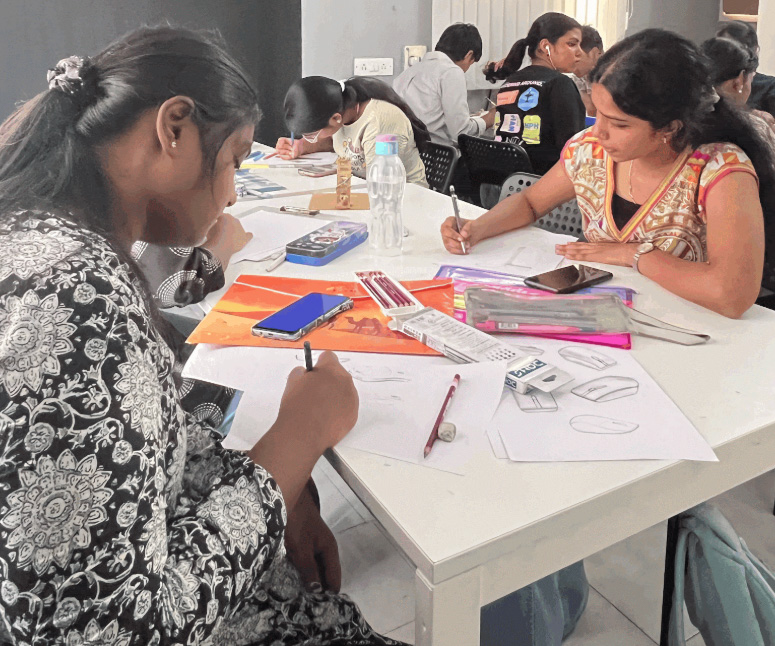
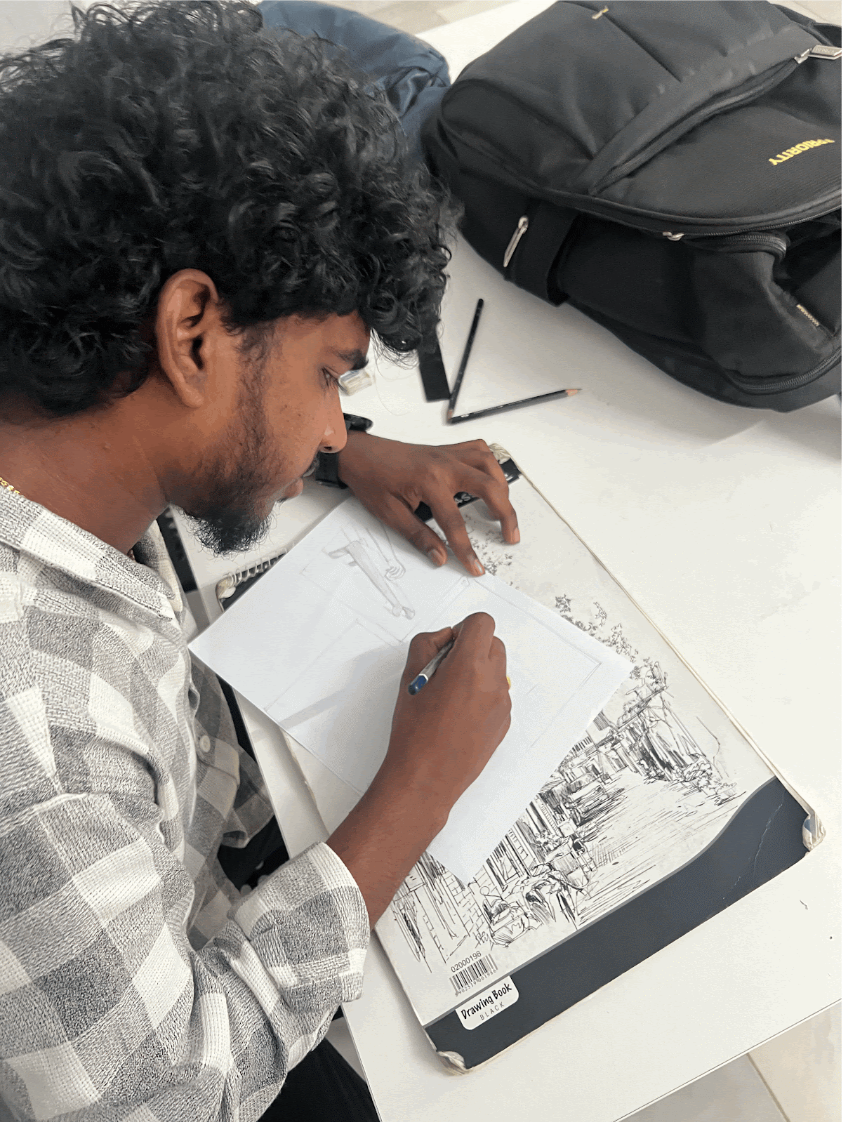
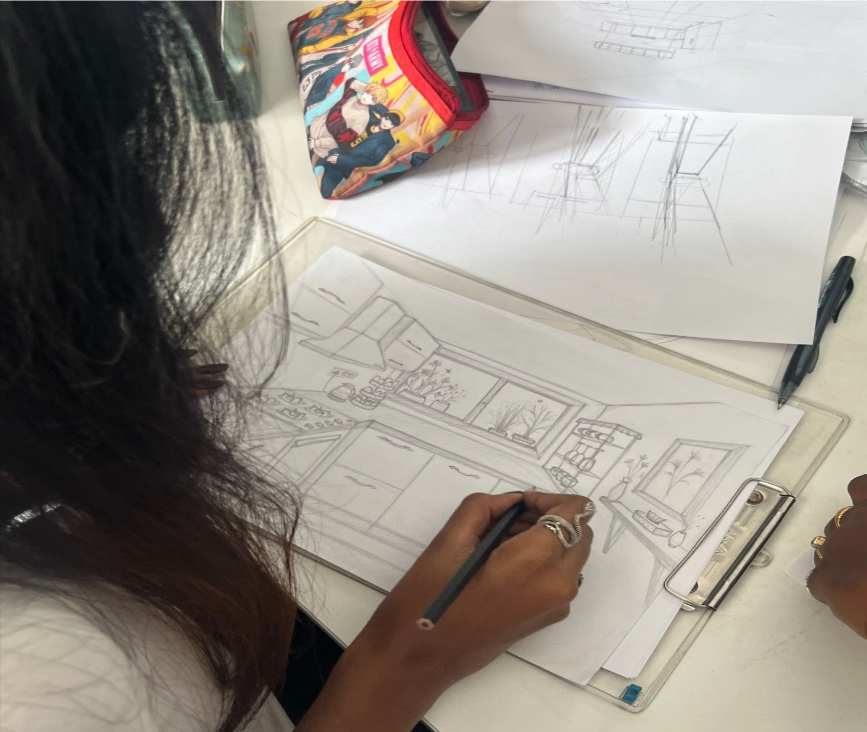
Sketching helps you record observations, explore forms and communicate ideas. You do not need to begin as an expert artist.
Try drawing everyday objects from different angles, studying the layout of a room, observing how people use a product or sketching alternative solutions to a small problem.
The goal is to practise looking carefully and communicating what you see or imagine.
Step 3: Solve small design problems
Choose an everyday problem and develop a solution.
For example:
- Redesign a school bag to make it more comfortable.
- Improve the layout of a school noticeboard.
- Create clearer instructions for using a public service.
- Design a simple app flow for a common task.
- Explore ways to reduce packaging waste.
Identify the problem, understand the user, sketch different ideas and explain why you selected one solution. This helps you practise design thinking rather than focusing only on appearance.
Step 4: Research courses and entrance exams
Once you have explored a few specialisations, research the programmes that offer relevant training.
Depending on the course and institution, Indian students may explore admission routes such as:
- NID DAT for applicable programmes offered by participating National Institute of Design campuses.
- NIFT entrance examinations for eligible programmes and admission cycles.
- UCEED for participating institutions offering undergraduate design admissions.
- University-specific entrance tests, portfolios or selection processes for other design programmes.
- NATA or JEE Main Paper 2, where applicable, for architecture admissions under the relevant eligibility rules.
These exams are not interchangeable, and they do not all lead to every design specialisation. Check the official eligibility criteria, participating institutions and selection process for the year you plan to apply.
Step 5: Document your design process
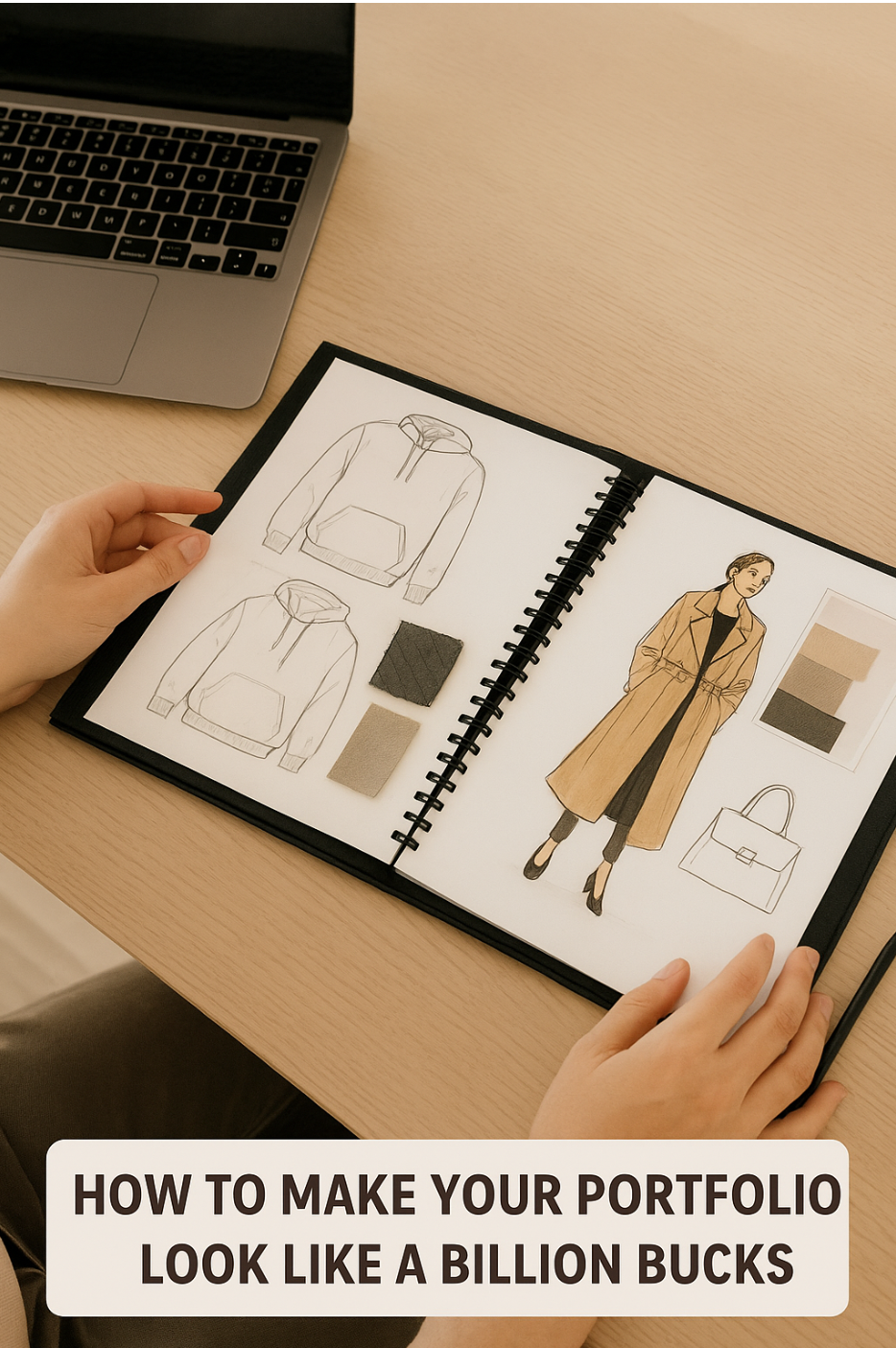
Keep your sketches, research, experiments and improvements together. Documenting the process helps you understand how your ideas develop and can provide material for a portfolio where required.
A useful project should explain the problem, the people it is designed for, the options you explored and what you learned from the outcome.
Step 6: Choose a course for its learning opportunities
Look beyond the course title. Review the curriculum, faculty, studio facilities, practical projects, internships, industry exposure and graduate opportunities.
The right programme should help you develop fundamental skills, explore your interests and gain experience with the kinds of problems designers work on.
Frequently Asked Questions
No one can reliably identify a single best design career for 2046. UI/UX, product, interior, communication, graphic, fashion, animation, industrial, sustainable and research-focused design all address different needs. Their future opportunities will depend on technological, economic and industry changes.
Design can be a suitable career for students who enjoy creative thinking, observation, research and problem-solving. The right specialisation depends on your interests, preferred work style, education options and willingness to keep learning.
There is no single answer. Students who enjoy visual communication may explore graphic or communication design. Those who like physical objects may prefer product design, while students interested in digital technology may explore UI/UX. Fashion, animation and interior design offer other creative pathways.
AI may automate certain tasks and change how designers work. The effect will differ across fields and roles. Developing strong fundamentals, research skills, technical knowledge, adaptability and the ability to make sound design decisions can help students prepare for change.
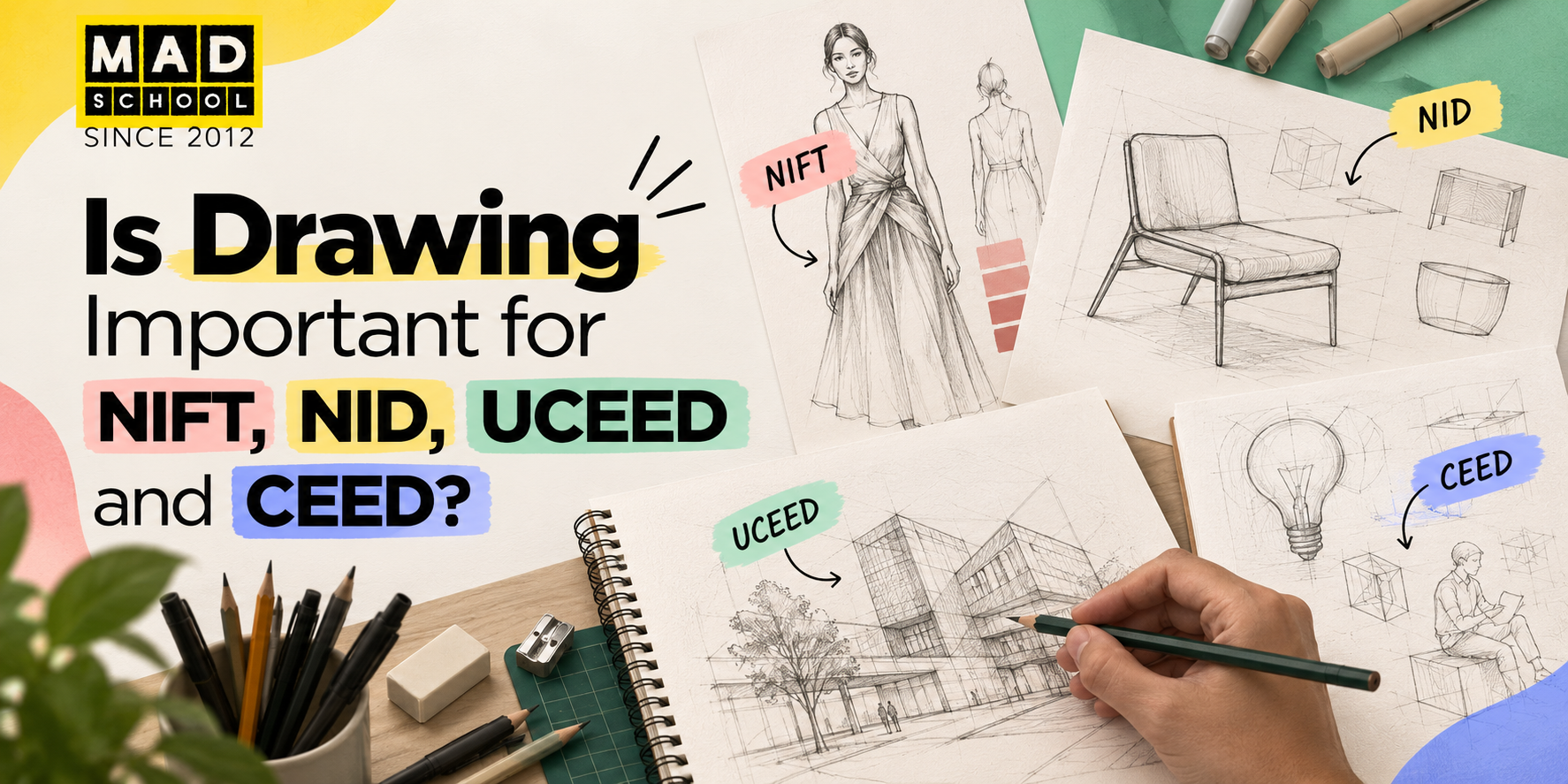
Drawing is useful for observing, visualising and communicating ideas, but design also involves research, logic, experimentation and problem-solving. The importance of drawing depends on the course and entrance examination. Check the requirements for your intended programme.
Depending on your interests and eligibility, you can explore B.Des programmes in UI/UX or interaction design, product design, interior design, communication design, graphic design, fashion design, animation, industrial design and related areas. Course names and availability differ by institution.
A transition may be possible, depending on your education, experience and the skills required for the new role. Some areas have overlapping skills, while others require additional technical or specialist training. Projects and continued learning can help you explore adjacent fields.
You can begin by practising observation, drawing, creative thinking and problem-solving while researching the courses and exams relevant to your goals. Your preparation timeline will depend on your current skills, target institutions and admission year.
Conclusion: Your Future in Design Starts With the Skills You Build Today
Nobody can predict exactly what every design career will look like 20 years from now. Tools will change, new technologies will emerge and some job responsibilities will evolve.
But people will continue to need useful products, comfortable spaces, clear communication, engaging experiences and solutions to real problems. Designers can contribute to these needs in different ways, from developing digital interfaces and clothing to designing vehicles, creating visual content and researching human behaviour.
The ten careers in this article offer different starting points. You do not have to choose the most technical field or the trendiest specialisation. Start by understanding what interests you, explore the work involved and build the fundamentals that help you improve.
If you are considering a design course after Class 12, begin researching your options, practise solving design problems and understand the entrance requirements for your target institutions.
At MAD School, students can explore design aptitude and prepare for relevant design and architecture entrance examinations, including NID, NIFT, UCEED, CEED and NATA, according to their goals and eligibility.
Your first course is only the beginning. Your willingness to observe, experiment, learn and adapt can help you keep growing as the design industry evolves.